
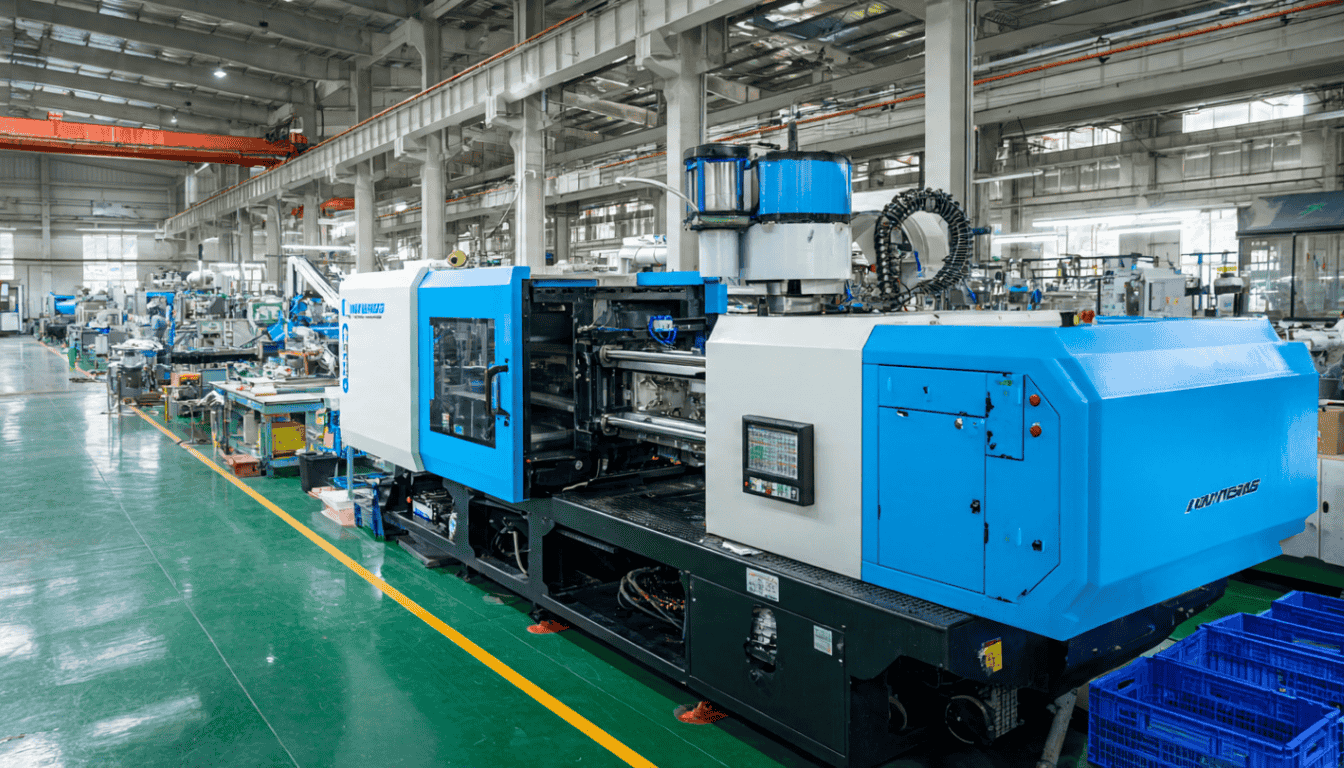
Plastic injection molding has become the backbone of modern industrial manufacturing. From automotive interior trims and engine compartment components to electronic housings and appliance structures, countless functional and structural parts rely on this process.
What makes injection molding indispensable is not simply its ability to produce plastic parts, but its capability to deliver high-volume production with repeatable dimensional accuracy and controlled process stability.
In automotive programs, for example, a single interior component may require production volumes exceeding hundreds of thousands of units per year.
At that scale, even minor dimensional variation or cosmetic inconsistency can translate into significant cost and quality risks. Injection molding, when supported by robust mold design and validated process parameters, allows manufacturers to maintain tight tolerances, controlled shrinkage behavior, and stable cycle times across long production runs.
For global OEMs, injection molding is therefore not merely a production method. It is a strategic element within the manufacturing supply chain, influencing tooling investment decisions, product lifecycle planning, and cost-per-unit optimization.
Tool longevity, cavity balance, material selection, and automation integration all play a direct role in determining long-term program profitability.
The Role of Plastic Injection Molding in Modern Industrial Production
In today’s highly competitive manufacturing environment, industries demand more than just volume.
Components must meet strict dimensional tolerances, mechanical performance targets, surface finish standards, and international regulatory requirements, all while remaining cost-efficient.
Plastic injection molding addresses these challenges through the integration of:
1. Precision mold engineering (including shrinkage compensation and cooling channel optimization)
2. Advanced injection machines with closed-loop process control
3. Proper material selection based on mechanical, thermal, and environmental requirements
For instance, in exterior automotive parts exposed to UV and temperature cycling, resin selection and mold temperature control significantly affect long-term dimensional stability and color retention.
A mismatch between material properties and processing window can lead to warpage, sink marks, or premature aging.
As global supply chains become increasingly interconnected, manufacturers must also ensure production consistency across extended timelines and multi-batch deliveries.
Injection molding supports this need through process repeatability, validated tooling, and scalable automation, making it a critical technology for mass production programs that must comply with international quality standards such as ISO and automotive-specific requirements.
What Is Plastic Injection Molding?
Plastic injection molding is a precision manufacturing process where thermoplastic resin is heated to a controlled melt temperature and injected into a closed steel mold under high pressure and velocity.
The molten material flows through a defined runner and gate system, fills the cavity geometry, and is then held under packing pressure to compensate for material shrinkage before cooling and solidification.
Once the part reaches sufficient structural rigidity, the mold opens and the component is ejected, ideally within a repeatable cycle time measured in seconds.
In industrial practice, injection molding is not simply “melting and injecting plastic.” The process requires tight control over critical parameters such as:
1. Melt temperature
2. Injection speed profile
3. Holding pressure and time
4. Cooling efficiency
5. Mold temperature stability
Even small deviations in these variables can result in dimensional inaccuracy, sink marks, warpage, short shots, or internal stress.
The term injected plastic typically refers to thermoplastic materials such as PP, ABS, PC, PA, or engineering-grade resins that are melted and formed through this process.
Because thermoplastics can be reheated and reshaped, they are particularly suited for high-volume industrial production where consistency and repeatability are essential.
What makes injection molding especially valuable for OEM applications is its ability to produce:
1. Complex geometries with integrated ribs, bosses, and snap-fit features
2. Tight dimensional tolerances across multi-cavity molds
3. High repeatability over long production runs
4. Stable quality at mass-production scale
For example, in automotive interior components with cosmetic surface requirements, mold surface finishing, gate positioning, and material flow balance directly influence final appearance.
In structural brackets, fiber orientation and packing pressure affect mechanical strength and dimensional stability.
In short, plastic injection molding combines material science, mold engineering, and process control into a single integrated system, enabling manufacturers to produce high-precision components efficiently and consistently.
How Does the Plastic Injection Molding Process Work?
For engineers, sourcing teams, and manufacturing decision makers, understanding how the plastic injection molding process actually works goes beyond basic theory. In real production environments, part quality is not determined by one single factor, but by how well material behavior, mold engineering, and machine parameters interact throughout the cycle.
A stable molding process is built on control, repeatability, and validation. Each stage must be managed carefully to ensure dimensional consistency, cosmetic quality, and long-term tooling performance.
Stages of the Plastic Injection Molding Process
1. Material Selection and Mold Engineering
The process begins long before the machine starts running. Selecting the appropriate thermoplastic resin requires evaluating:
a. Mechanical load requirements
b. Heat resistance and operating temperature
c. Chemical exposure
d. Dimensional stability
e.Cost targets
For instance, ann automotive interior bracket may require reinforced PP for stiffness-to-weight efficiency, while an exterior housing exposed to UV and temperature cycling may require PC/ABS with stabilizers.
Simultaneously, mold design plays a decisive role in final part quality. Core and cavity construction, runner balance, gate type and location, venting, and cooling channel layout must all be engineered to support proper material flow and heat dissipation.
In practice, many quality issues, such as warpage, weld lines in critical areas, or uneven shrinkage can often be traced back to design-stage decisions rather than machine settings.
2. Material Feeding and Preparation
Plastic pellets are fed through the hopper into the barrel of the injection molding machine. At this stage, material handling discipline is critical.
Moisture-sensitive materials such as PA or PC require proper drying before processing. Inconsistent pellet size, contamination, or excessive moisture can lead to defects such as splay marks, bubbles, or degraded mechanical properties.
In high-volume OEM production, raw material traceability and controlled storage conditions are standard practice to ensure batch-to-batch consistency.
3. Plasticizing, Melting, and Injection
Inside the barrel, the rotating screw conveys the pellets forward while applying heat through external heaters and shear friction. The resin transitions into a homogeneous molten state.
Injection is not a single-speed action. In optimized processes, engineers define an injection speed profile, often starting fast to fill thin sections, then slowing near the end of fill to prevent overpacking or flash.
Critical parameters at this stage include:
a. Melt temperature
b. Injection pressure
c. Injection speed
d. Screw back pressure
Improper control may result in short shots, burn marks, flow hesitation, or internal stress accumulation.
4. Packing (Holding Pressure) Phase
Once the cavity appears filled, the process transitions to the packing phase. Holding pressure is applied to compensate for volumetric shrinkage as the material begins cooling.
This phase is particularly important for parts with thicker wall sections or structural features. Insufficient holding pressure may cause sink marks or internal voids, while excessive pressure can create flash or induce stress.
Experienced process engineers often fine-tune holding pressure and time during mold trials to achieve optimal dimensional stability without unnecessarily extending cycle time.
5. Cooling and Solidification
Cooling typically accounts for the largest portion of the molding cycle. The mold’s cooling system, designed with strategically placed cooling channels removes heat from the part uniformly.
Uneven cooling is one of the primary causes of warpage. For parts with asymmetric geometry or varying wall thickness, cooling design becomes a critical engineering challenge.
In production environments, mold temperature controllers are used to maintain stable thermal conditions, ensuring repeatability across long runs.
6. Ejection and Quality Verification
Once the part reaches sufficient rigidity, the mold opens and the ejector system pushes the component out. Proper ejector placement is essential to prevent deformation or surface marks.
After ejection, parts undergo inspection, which may include:
a. Visual defect checking
b. Dimensional measurement
c. Surface finish evaluation
d. Functional fit testing
For OEM programs, this stage may also involve SPC monitoring to maintain statistical process control over critical dimensions.
When all stages are properly engineered and validated, plastic injection molding becomes a highly repeatable and cost-efficient manufacturing solution. The combination of optimized tooling, controlled process parameters, and disciplined quality inspection allows manufacturers to achieve:
a. Tight dimensional tolerances
b. Stable cosmetic quality
c. Predictable cycle times
d. Scalable mass production capability
In large-scale industrial applications, process consistency is not optional, it is the foundation of long-term program success.
What Types of Plastics Are Used in Injection Molding?
In injection molding, material selection is not merely a purchasing decision, it is a critical engineering step that directly determines part performance, durability, process stability, and long-term cost efficiency.
Plastics used in injection molding are generally divided into two broad categories: commodity plastics and engineering plastics.
While this classification appears simple, the decision-making process behind it is often highly technical and application-driven.
The choice of material must consider:
1. Mechanical load requirements
2. Impact resistance
3. Thermal stability
4. Chemical exposure
5. UV resistance
6. Dimensional tolerance targets
7. Surface finish requirements
8. Expected product lifecycle
A mismatch between material capability and functional demand can lead to premature failure, deformation, or unnecessary production cost.
Commodity Plastics in Injection Molding
Commodity plastics remain the backbone of high-volume injection molding programs, particularly when performance requirements are moderate but cost efficiency and production stability are critical. In many OEM projects, these materials are selected not only for their lower price point, but for their predictable processing behavior and wide supply availability.
From a manufacturing standpoint, commodity plastics typically offer broader processing windows and shorter cycle times compared to engineering resins. This makes them highly suitable for large-scale production where consistency, repeatability, and cost-per-part optimization are primary objectives.
However, “commodity” does not mean “simple.” Each material still requires careful control of shrinkage behavior, flow characteristics, and cooling balance to achieve dimensional stability.
Below are the most commonly used commodity plastics in injection molding:
Polypropylene (PP)
Polypropylene is one of the most widely processed thermoplastics in injection molding. It offers a strong balance between cost, chemical resistance, and fatigue durability.
One of PP’s key advantages is its excellent hinge performance, which makes it suitable for living hinge applications and components subjected to repeated flexing.
It is frequently used in automotive interior trims, battery covers, appliance housings, and consumer product enclosures.
From a process perspective, PP exhibits relatively high shrinkage compared to materials like ABS. This requires precise mold shrinkage compensation and balanced cooling to prevent warpage, especially in flat or thin-wall components.
In some applications, mineral- or glass-filled PP is used to improve stiffness and reduce shrinkage variability, though this may influence surface finish and fiber orientation behavior.
Polyethylene (PE)
Polyethylene is available in several grades, primarily HDPE (High-Density Polyethylene) and LDPE (Low-Density Polyethylene), each with distinct performance characteristics.
a. HDPE provides higher stiffness and better dimensional rigidity.
b. LDPE offers superior flexibility and impact absorption.
PE materials are commonly used in parts requiring moisture resistance, chemical durability, and impact tolerance. Examples include containers, protective covers, and certain non-load-bearing industrial components.
Processing PE is generally stable, but due to its relatively high thermal expansion and shrinkage rate, uniform cooling design is essential to maintain dimensional consistency in larger parts.
Polyvinyl Chloride (PVC)
PVC offers strong chemical resistance and can be formulated as either rigid or flexible material depending on plasticizer content.
Rigid PVC is used in structural profiles and industrial housings, while flexible PVC is suitable for insulation components and protective coverings.
From a processing standpoint, PVC requires strict temperature control. Overheating can lead to material degradation and corrosive by-products, which may impact mold longevity.
For this reason, tooling material selection and preventive maintenance are particularly important when molding PVC.
Application Perspective
Commodity plastics are widely applied in:
1. Home appliance components
2. Consumer product housings
3. Packaging applications
4. Non-structural automotive parts
5. General industrial components
While they are not typically used for high-load structural parts, their economic advantage and process stability make them highly effective for large-volume production programs.
In practice, successful implementation of commodity plastics depends on understanding their shrinkage characteristics, flow behavior, and cooling sensitivity not simply choosing them based on cost.
Engineering Plastics in Injection Molding
Engineering plastics are selected when component performance cannot be compromised.
Unlike commodity resins, these materials are formulated to deliver higher mechanical strength, improved thermal resistance, tighter dimensional stability, and enhanced durability under demanding operating conditions.
In OEM manufacturing, particularly automotive and electronics, engineering plastics are often specified not only for performance, but for long-term reliability under mechanical load, temperature cycling, humidity exposure, and chemical contact.
From a processing standpoint, engineering plastics typically require:
1. Narrower processing windows
2. Higher and more stable mold temperatures
3. Strict moisture control (for hygroscopic materials)
4. More precise packing and cooling control
Failure to control these parameters can lead to dimensional drift, internal stress, surface defects, or degraded mechanical properties.
Below are commonly used engineering plastics in injection molding:
Polycarbonate (PC)
Polycarbonate is known for its exceptional impact resistance and good thermal stability. It also offers high optical clarity, making it suitable for transparent or semi-transparent applications.
Typical uses include automotive lighting components, electronic display covers, and protective housings.
However, PC is sensitive to moisture and thermal degradation. Improper drying can cause splay marks or reduced impact strength. Additionally, excessive shear during processing may lead to yellowing or internal stress, which can affect long-term optical performance.
Polymethyl Methacrylate (PMMA)
PMMA provides outstanding optical transparency and a naturally glossy surface finish. It also offers strong UV resistance, making it suitable for outdoor applications such as lamp lenses, display panels, and decorative automotive parts.
Compared to PC, PMMA is more scratch-resistant but less impact-resistant. From a molding perspective, gate positioning and flow design are critical to avoid visible flow lines or weld lines, particularly in visually critical components.
Polybutylene Terephthalate (PBT)
PBT is widely used in automotive and electronic applications due to its dimensional stability, heat resistance, and strong electrical insulation properties.
It performs well in connectors, sensor housings, and components exposed to temperature fluctuations and humidity.
Because PBT is semi-crystalline, shrinkage control and cooling balance are essential to prevent warpage.
Glass-fiber-reinforced grades further enhance stiffness but require attention to fiber orientation, which can influence both strength distribution and dimensional behavior.
Acrylonitrile Butadiene Styrene (ABS)
ABS offers a balanced combination of toughness, rigidity, and surface quality. It is relatively easy to process and provides excellent cosmetic finish, making it ideal for automotive interiors, consumer electronics housings, and aesthetic components.
From a production standpoint, ABS has moderate shrinkage and good flow characteristics, which support stable cycle times. However, excessive mold temperature variation can impact surface gloss consistency and dimensional repeatability.
PP Compound
PP compound refers to modified polypropylene reinforced with fillers such as glass fiber, talc, or mineral additives.
Compared to standard PP, these compounds provide improved stiffness, reduced shrinkage, and better dimensional stability. They are frequently used in lightweight structural automotive parts, battery housings, and interior support components.
While reinforced PP enhances performance, it introduces considerations such as increased mold wear (in glass-filled grades) and potential surface fiber exposure if processing is not optimized.
Polyamide (PA/Nylon)
Polyamide is widely used in mechanically demanding applications due to its high tensile strength, wear resistance, and thermal stability.
Common applications include gears, engine-compartment brackets, structural supports, and friction-related components.
PA is hygroscopic and must be carefully dried before processing. Moisture absorption affects both processing behavior and final mechanical performance. Additionally, dimensional changes due to post-molding moisture absorption must be considered during design and tolerance planning.
Polyoxymethylene (POM)
POM, also known as acetal, is valued for its low friction coefficient, high stiffness, and excellent dimensional stability.
It is commonly used in precision components such as gears, locking mechanisms, snap-fit systems, and sliding elements.
POM flows well and supports tight tolerances, but it requires controlled processing temperatures to prevent material degradation. Proper venting is also critical to avoid burn marks caused by trapped gas.
Acrylonitrile Styrene Acrylate (ASA)
ASA shares similar mechanical properties with ABS but offers superior UV and weather resistance.
It is commonly specified for automotive exterior components and outdoor housings where surface durability and color stability under sun exposure are required.
From a molding perspective, ASA demands consistent temperature control to maintain surface finish quality, especially for parts with high cosmetic requirements.
Application Perspective
Engineering plastics are widely applied in:
a. Automotive structural and exterior components
b. Electronic connectors and housings
c. Precision industrial mechanisms
d. Components exposed to thermal cycling and mechanical stress
In real production environments, selecting an engineering plastic is not solely about achieving higher strength. It also involves balancing:
a. Processability
b. Cycle time impact
c. Mold durability
d. Dimensional tolerance capability
f. Long-term environmental stability
When properly engineered and validated, these materials enable manufacturers to deliver high-performance components that meet stringent OEM standards and long service life requirements.
How to Choose the Right Plastic Material
Selecting the right plastic material is a critical engineering decision that directly influences product performance, mold design strategy, and long-term production stability. In industrial and OEM applications, material selection should never be based solely on datasheet specifications or cost per kilogram.
A structured evaluation typically considers:
1. Mechanical requirements: tensile strength, impact resistance, fatigue performance, and load-bearing capacity
2. Thermal performance: continuous service temperature, heat deflection temperature (HDT), and thermal cycling resistance
3. Chemical resistance: exposure to oils, solvents, humidity, or cleaning agents
4. Dimensional stability: shrinkage rate, warpage tendency, and tolerance sensitivity
5. Environmental exposure: UV resistance, weathering, and aging behavior
6. Manufacturing feasibility: process window, cycle time impact, and mold wear
7. Cost-performance balance: total cost of ownership, not just raw material price
For example, selecting a high-strength nylon for a non-load-bearing housing may unnecessarily increase material cost and drying requirements without adding functional value.
Conversely, choosing standard PP for a part exposed to elevated temperature and mechanical stress may result in creep deformation or early failure.
In practical manufacturing environments, experienced injection molding suppliers provide engineering input during the early design phase. This may include:
a. Material comparison analysis
b. Shrinkage and warpage prediction
c. Mold flow simulation review
d. Prototype validation and mechanical testing
In some cases, optimizing the material choice can reduce part weight, shorten cycle time, or improve dimensional consistency, directly impacting production efficiency and program profitability.
Ultimately, the right plastic material is the result of aligning functional performance, manufacturability, and commercial objectives.
A well-informed material decision at the beginning of a project significantly reduces downstream risks such as mold rework, dimensional correction, or field performance issues.
Injection Molding Parts and Mold Components
Every injection molded part is only as good as the mold that produces it. In high-volume OEM production, the mold is not merely a forming tool, it is a precision asset designed to operate consistently over hundreds of thousands, or even millions, of cycles.
A typical injection mold consists of several critical systems:
a. Core and cavity: Define the final geometry, tolerances, and surface finish of the part. Dimensional accuracy, steel selection, and surface treatment directly influence product consistency and mold lifespan.
b. Runner and gate system: Control how molten plastic flows into the cavity. Proper gate location and runner balance are essential to prevent short shots, weld lines in critical areas, or uneven packing.
c. Cooling channels: Regulate heat removal and determine cycle time efficiency. Poor cooling design is one of the most common causes of warpage and dimensional instability.
d. Ejector system: Ensures safe and consistent part removal without deformation or surface damage.
In practical production, mold design decisions directly affect:
1. Dimensional repeatability
2. Cosmetic quality
3. Cycle time
4. Tool maintenance frequency
5. Overall cost per part
For example, an unbalanced multi-cavity mold may produce dimensional variation between cavities, creating assembly issues downstream.
Similarly, inefficient cooling channel layout can extend cycle time by several seconds, which, in mass production, significantly impacts annual output and production cost.
This is why mold engineering, material behavior, and process parameters must be developed as an integrated system rather than separate considerations.
Why Plastic Injection Molding Is Essential for OEMs
For OEMs in automotive, electronics, and home appliance industries, injection molding is not simply about producing plastic parts, it is about achieving scalable, repeatable, and globally consistent manufacturing performance.
OEM programs typically demand:
1. Tight dimensional tolerances
2. Long-term supply stability
3. Traceable production records
4. Compliance with international quality standards
5. Cost control across extended production lifecycles
Injection molding supports these requirements through validated tooling, controlled processing parameters, and statistical process monitoring.
Once a mold and process window are properly optimized, production can be replicated consistently across long runs with minimal variation.
In automotive applications, for instance, components must maintain dimensional accuracy across temperature variation and vibration exposure.
In electronics, housings must meet both structural and aesthetic standards while protecting internal circuitry. These requirements demand not only suitable materials, but also stable and repeatable molding conditions.
From a strategic perspective, injection molding enables OEMs to:
1. Optimize part integration through complex geometries
2. Reduce assembly steps with snap-fit or integrated features
3. Achieve lightweighting targets
4. Maintain competitive cost per unit at high volume
Ultimately, injection molding becomes a foundational technology within global manufacturing strategies, providing the precision, scalability, and process control required to support long-term OEM partnerships.
Banshu Plastic: A Professional Plastic Injection Manufacturing Partner for Global Markets
Banshu Plastic Indonesia is a professional plastic injection molding manufacturer serving global OEM and industrial customers across automotive, electronics, and home appliance industries.
With more than 20 years of expertise in plastic injection molding, Banshu Plastic integrates precision mold engineering, controlled processing parameters, and structured quality assurance systems to deliver consistent, high-performance plastic components.
Our focus extends beyond part production, we emphasize dimensional accuracy, cycle time efficiency, and long-term production stability to support demanding mass-production programs.
To meet international manufacturing and automotive supply chain requirements, Banshu Plastic operates under globally recognized management systems:
a. IATF 16949:2016 for Automotive Quality Management System
b. ISO 9001:2015 for Quality Management System
c. ISO 14001:2015 for Environmental Management System
These certifications reflect our commitment to standardized process control, risk-based thinking, product traceability, continuous improvement, and environmentally responsible manufacturing practices.
From tooling development and material validation to mass production and final inspection, every stage is managed under documented procedures and measurable quality indicators.
This structured approach ensures stable production output, repeatable quality performance, and compliance with international OEM expectations.
With certified systems, experienced engineering teams, and export-oriented manufacturing capability, Banshu Plastic is positioned as a reliable long-term partner for plastic injection molding solutions in global markets.