
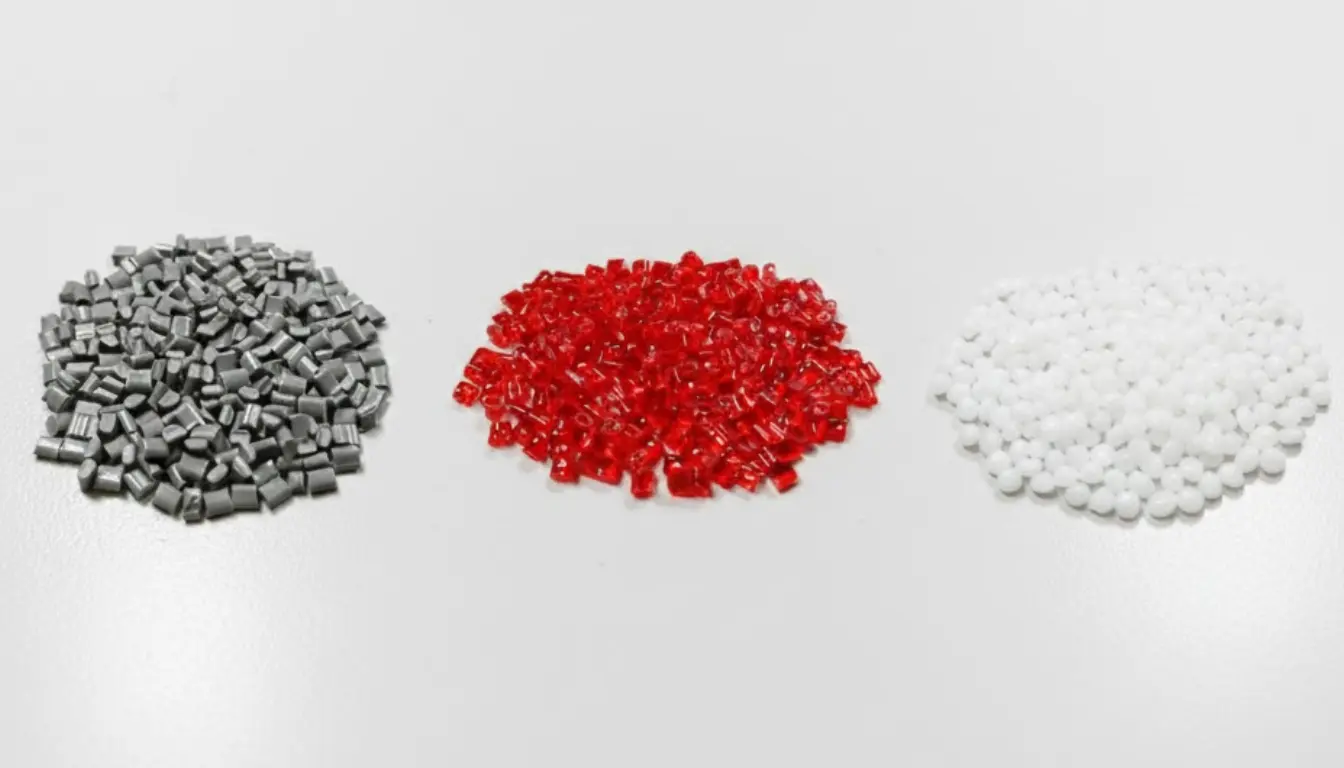
Material selection is one of the most critical engineering decisions in product development, directly influencing part performance, manufacturability, and long-term product reliability.
In plastic component manufacturing particularly in injection molding the distinction between engineering plastics and commodity plastics significantly impacts mechanical strength, dimensional stability, thermal resistance, mold design strategy, processing window, and overall lifecycle cost.
Material behavior during molding, including shrinkage rate, warpage tendency, and flow characteristics, must be evaluated alongside end-use performance requirements.
Selecting materials based solely on raw resin price can result in over-engineering, unnecessary tooling cost escalation, or, more critically, premature product failure due to inadequate structural or thermal performance.
A structured, performance-driven material selection approach considering mechanical load, environmental exposure, tolerance requirements, and projected production volume is essential to achieving both technical reliability and cost efficiency.
This article provides a technical comparison to support engineers, product developers, and sourcing teams in making data-based, application-specific material decisions aligned with manufacturing feasibility and long-term production goals.
Understanding Thermoplastic Classification
Thermoplastics are commonly classified into commodity plastics and engineering plastics based on their mechanical properties, thermal resistance, creep behavior, and long-term dimensional stability under operational stress.
This classification is not merely academic it directly influences mold design strategy, processing parameters, structural performance, and overall product durability in injection molding applications.
Commodity plastics are typically selected for cost-sensitive applications with moderate mechanical and thermal requirements.
In contrast, engineering plastics are formulated to withstand higher loads, elevated temperatures, chemical exposure, and demanding environmental conditions.
From a manufacturing standpoint, differences in melt temperature, viscosity profile, shrinkage rate, and moisture sensitivity between these two categories significantly affect processing window control, tooling design, and tolerance management.
Understanding these distinctions is essential for aligning material capability with functional requirements, production scalability, and lifecycle cost targets.
Commodity Plastics
Commodity plastics are high-volume thermoplastic materials widely used in cost-driven, non-structural applications where mechanical load and thermal exposure are relatively moderate.
While they provide adequate performance for general-purpose components, they are not engineered for sustained structural stress, elevated service temperatures, or aggressive environmental conditions.
Common examples include:
1. Polypropylene (PP)
2. Polyethylene (PE)
3. Polystyrene (PS)
4. Acrylonitrile Butadiene Styrene (ABS)
Typical Technical Characteristics
1. Tensile strength: approximately 20–45 MPa
2. Heat Deflection Temperature (HDT): typically below 100°C
3. Modulus: lower stiffness compared to engineering-grade polymers
4. Creep resistance: limited under sustained mechanical load
5. Cost per kg: relatively low, suitable for high-volume production
From a processing standpoint, commodity plastics generally offer wider processing windows, lower melt temperatures, and easier flow characteristics, making them well-suited for high-cavity injection molding applications where cost efficiency and cycle time are primary considerations.
These materials are commonly used for housings, packaging components, consumer products, and non-load-bearing automotive interior parts.
However, their limitations in mechanical strength, long-term creep resistance, and thermal stability become critical when components are exposed to structural loads, elevated temperatures, vibration, or chemical environments typical in automotive under-the-hood applications.
For engineering teams, selecting commodity plastics without evaluating service conditions and lifecycle stress factors may lead to dimensional instability, premature deformation, or field performance issues.
Engineering Plastics
Engineering plastics are formulated to deliver higher mechanical strength, improved thermal resistance, enhanced chemical stability, and superior long-term dimensional performance under load.
They are commonly specified in structural or semi-structural applications where mechanical failure, thermal deformation, or dimensional drift could result in functional disruption, safety concerns, or warranty risk.
Common examples include:
1. Polyamide (PA / Nylon)
2. Poly Methyl Metacrylate (PMMA)
3. Polypropylene (PP Compound)
4. Acrylonitrile Styrene Acrylate (ASA)
5. Polycarbonate (PC)
6. Polyoxymethylene (POM)
7. Polybutylene Terephthalate (PBT)
Typical Technical Characteristics
1. Tensile strength: approximately 50–100+ MPa (higher with reinforcement)
2. Heat Deflection Temperature (HDT): typically 120–200°C or higher, depending on grade
3. Higher modulus and stiffness for load-bearing applications
4. Improved creep resistance under sustained mechanical stress
5. Enhanced fatigue performance in dynamic applications
6. Frequently reinforced with glass fiber or mineral fillers to increase structural rigidity and dimensional stability
From a processing standpoint, engineering plastics often require tighter process control due to higher melt temperatures, narrower processing windows, moisture sensitivity (particularly for polyamides), and greater shrinkage variability when reinforced grades are used.
In injection molding, mold design must account for fiber orientation, anisotropic shrinkage behavior, and potential warpage when working with reinforced engineering polymers.
Engineering plastics are widely applied in automotive components such as under-the-hood parts, structural brackets, precision gears, electrical housings, connectors, and mechanical assemblies where strength-to-weight ratio and thermal endurance are critical.
Although material cost per kilogram is higher than commodity plastics, the performance-to-weight efficiency, reduced part thickness potential, and improved durability often justify the investment in high-demand applications.
For engineers and sourcing teams, the decision to use engineering plastics should be based on quantified load analysis, service temperature conditions, lifecycle expectations, and tolerance requirements not solely on material classification.
Mechanical Performance Comparison
1. Tensile Strength and Modulus
Engineering plastics demonstrate significantly higher tensile strength and elastic modulus compared to commodity polymers, enabling their use in load-bearing and semi-structural assemblies.
For example, glass fiber–reinforced Polyamide (PA GF30) can achieve tensile strength exceeding 150 MPa, with modulus values above 7–10 GPa depending on fiber content and orientation. This allows thinner wall sections while maintaining structural rigidity.
In contrast, Polypropylene (PP), a typical commodity plastic, generally exhibits tensile strength in the range of 25–35 MPa with substantially lower stiffness.
While PP offers good ductility and impact absorption, it lacks the rigidity required for dimensional-critical housings, mechanical brackets, or assemblies subject to sustained loading.
From a design engineering perspective, higher modulus materials reduce deflection under load, improve tolerance stability, and enhance vibration resistance.
2. Heat Deflection Temperature (HDT)
Heat Deflection Temperature (HDT) measures a polymer’s resistance to deformation under a specified load at elevated temperature. It is a key parameter for applications exposed to continuous thermal stress.
Typical ranges:
1. Commodity plastics: generally below 100°C
2. Engineering plastics: typically 120–200°C or higher (grade-dependent)
Materials such as reinforced PA, PBT, and high-performance grades of Polyoxymethylene maintain structural integrity in thermally demanding environments.
In applications such as under-hood automotive components, power tool housings, or electrical enclosures near heat-generating circuits, commodity polymers may soften, creep, or lose stiffness.
Engineering plastics, by contrast, retain load-bearing capacity and dimensional stability under elevated temperatures.
For product designers, HDT directly influences wall thickness decisions, rib design, and long-term part reliability.
3. Creep Resistance
Creep refers to time-dependent deformation under constant mechanical stress. In polymer engineering, creep behavior is critical for components subjected to sustained loads such as screws, snap-fits, brackets, or gear assemblies.
Commodity plastics typically exhibit higher creep rates due to lower modulus and weaker intermolecular bonding. Over time, this may result in:
1. Dimensional shift
2. Loss of clamping force
3. Stress relaxation in snap-fit features
4. Premature mechanical failure
Engineering plastics provide superior creep resistance, particularly:
1. Polyoxymethylene (POM), known for its low creep and excellent dimensional precision
2. Glass-filled Polyamide, which significantly reduces long-term deformation under load
In precision mechanical systems, creep resistance directly correlates with lifecycle performance and warranty risk mitigation.
4. Impact Resistance and Failure Mode
Impact resistance varies widely across polymer classes and must be evaluated in relation to operating temperature and expected failure mode.
For example:
1. Polycarbonate (PC) provides exceptional impact strength, even at low temperatures, making it suitable for protective covers and safety components.
2. Polystyrene (PS), a commodity plastic, is relatively brittle and prone to crack propagation under sudden load.
Beyond raw impact strength values, engineers must evaluate the failure mechanism:
1. Ductile yielding: gradual deformation before failure (preferred in many safety applications)
2. Brittle fracture: sudden crack initiation and propagation (higher risk in structural assemblies)
Material selection must therefore consider not only impact strength (Izod or Charpy values) but also service temperature, stress concentration points, and environmental exposure (e.g., UV, chemicals, humidity).
Engineering Insight
Mechanical performance comparison between commodity and engineering plastics should not be reduced to strength values alone. Proper selection requires:
1. Load case analysis (static vs dynamic)
2. Service temperature range
3. Long-term creep behavior
4. Fatigue cycles
5. Failure mode risk assessment
6. Dimensional tolerance requirements
In high-reliability industries such as automotive, electrical systems, and industrial equipment, upgrading from commodity to engineering plastic is often a risk-management decision rather than purely a mechanical upgrade.
Impact on Injection Molding Process
Material selection does not only determine part performance, it fundamentally influences manufacturability, process stability, tooling strategy, and long-term production cost.
In injection molding operations, polymer classification (commodity vs. engineering) directly affects thermal settings, moisture control, mold design parameters, and tooling durability.
Melt Temperature and Processing Window
Engineering plastics generally require:
1. Higher barrel and melt temperatures
2. Controlled resin drying (especially hygroscopic materials)
3. Tighter control of processing parameters
4. Narrower processing windows
For example, materials such as Polyamide (PA), Polycarbonate (PC), and Polybutylene Terephthalate (PBT) are hygroscopic and absorb moisture from ambient air.
If improperly dried before molding, hydrolysis can occur during melt processing. This results in:
1. Molecular chain scission
2. Reduced tensile strength and impact resistance
3. Silver streaking or splay marks
4. Surface defects and internal brittleness
Engineering plastics typically operate at melt temperatures ranging from 240°C to above 300°C, depending on grade. The higher viscosity sensitivity means minor deviations in temperature, injection speed, or holding pressure can significantly impact part quality.
Commodity plastics such as Polypropylene (PP) are generally easier to process. They:
1. Require lower melt temperatures
2. Have broader processing windows
3. Exhibit lower moisture sensitivity
4. Provide more forgiving cycle stability
From a production engineering standpoint, engineering plastics demand stricter process discipline and more robust quality control systems.
Mold Design Considerations
Shrinkage behavior differs substantially between commodity and engineering plastics, influencing mold cavity design and dimensional compensation strategy.
Key differences:
1. Commodity plastics often exhibit higher overall shrinkage and greater variability depending on processing conditions
2. Reinforced engineering plastics offer lower shrinkage but introduce anisotropic behavior due to fiber orientation
For example, glass fiber–reinforced Polyamide may shrink differently in flow direction versus transverse direction. This anisotropy can result in:
1. Warpage
2. Ovality in cylindrical features
3. Flatness deviation
4. Internal residual stress
To mitigate these risks, mold design must carefully optimize:
1. Gate type and gate location (to control flow front and fiber orientation)
2. Venting strategy (to prevent gas trapping at higher melt temperatures)
3. Cooling channel layout (to ensure uniform heat extraction)
4. Wall thickness uniformity (to reduce differential shrinkage)
In custom injection molding projects, material selection should precede final mold steel cutting. Late-stage material substitution frequently results in dimensional mismatch, warpage issues, or expensive tooling modification.
From a DFM perspective, polymer selection and tooling design must be treated as an integrated engineering decision not separate phases.
Tooling Wear and Mold Steel Selection
Glass fiber–reinforced engineering plastics are inherently abrasive. The presence of 20–40% glass fiber significantly accelerates:
1. Gate erosion
2. Runner wear
3. Cavity surface abrasion
4. Edge rounding at shut-off areas
Materials such as reinforced Polyamide or Polybutylene Terephthalate can reduce mold life if standard pre-hardened steel is used.
To maintain dimensional accuracy and surface finish, mold builders often specify:
1. Hardened tool steels (e.g., H13 class)
2. Nitriding treatment
3. PVD coatings
4. Wear-resistant inserts at gate areas
These upgrades increase initial tooling investment but prevent premature cavity degradation and dimensional drift during high-volume production.
In contrast, commodity plastics such as Polypropylene generally cause minimal abrasive wear. This results in:
1. Longer mold life
2. Lower maintenance frequency
3. Reduced spare part cost
4. Faster ROI on tooling investment
Tooling durability is frequently overlooked during early cost comparison between commodity and engineering plastics. However, over long production runs, abrasive material selection can significantly impact total cost of ownership.
Manufacturing Strategy Insight
When comparing commodity and engineering plastics, decision-makers must move beyond simple material price comparison (cost per kilogram). A technically sound evaluation requires a Total Cost of Ownership (TCO) perspective.
Key variables include:
1. Drying equipment requirements and dehumidification capacity (critical for hygroscopic polymers such as Polyamide and Polycarbonate)
2. Energy consumption due to higher barrel and mold temperatures
3. Cycle time impact resulting from cooling requirements and viscosity behavior
4. Scrap rate sensitivity caused by narrow processing windows
5. Mold steel specification and surface treatment requirements
6. Maintenance frequency due to abrasive fillers (e.g., glass fiber reinforcement)
7. Long-term tooling depreciation and refurbishment cost
For example, switching from Polypropylene to glass-filled engineering polymers may increase raw material cost by 2–3x. However, the real financial impact also includes:
1. Increased electricity consumption
2. Additional resin drying infrastructure
3. Higher mold steel hardness requirement
4. More stringent process control
5. Potential reduction in cycle efficiency
Conversely, in load-bearing or high-temperature environments, using commodity plastics may reduce initial cost but introduce:
1. Field failure risk
2. Dimensional instability
3. Warranty claims
4. Premature product replacement
Thus, the correct comparison is not material price, but performance risk versus lifecycle cost.
Cross-Functional Engineering Decision
In advanced injection molding operations, material selection is a cross-functional engineering decision involving:
1. Product design engineering (mechanical requirements, load cases, tolerance stack-up)
2. Process engineering (processing window, cycle optimization, quality stability)
3. Tooling design (shrinkage compensation, cooling strategy, wear resistance)
4. Procurement and cost engineering (ROI modeling and lifecycle analysis)
Material choice should be finalized before tool steel cutting begins. Late-stage substitution often driven by cost reduction attempts, frequently leads to:
1. Dimensional mismatch
2. Warpage deviation
3. Increased scrap rate
4. Mold modification cost
5. Production downtime
From a risk management standpoint, early alignment between material performance requirements and mold engineering strategy is essential for stable mass production.
Strategic Insight
The distinction between commodity and engineering plastics is not merely technical—it is strategic.
Commodity plastics are optimized for cost efficiency and high-volume consumer applications.
Engineering plastics are optimized for mechanical reliability, thermal endurance, and dimensional stability in demanding environments.
The appropriate selection depends on:
1. Functional load
2. Service temperature
3. Expected product lifespan
4. Dimensional tolerance requirements
5. Production volume
6. Acceptable risk threshold
Organizations that evaluate these parameters holistically achieve:
1. More predictable production stability
2. Lower long-term tooling cost
3. Reduced warranty exposure
4. Improved product reliability
In custom injection molding projects, material selection is not a purchasing decision, it is an engineering decision that determines both product performance and manufacturing economics.
Compression Molding vs Injection Molding Context
While injection molding dominates thermoplastic processing, compression molding is traditionally associated with thermosets and fiber-reinforced composite systems.
In compression molding, material is placed directly into a heated mold cavity and formed under pressure. This process is suitable for:
1. Thermosetting polymers
2. High-fiber composite laminates
3. Lower-volume structural components
In contrast, injection molding provides:
1. High repeatability
2. Tight dimensional tolerance control
3. Faster cycle times
4. Superior scalability for mass production
For highly reinforced engineering thermoplastics such as glass-filled Polyamide processing method must be evaluated carefully. Extremely high filler loading can increase viscosity and flow resistance, requiring optimized gating and higher injection pressure.
However, for high-volume precision components, injection molding remains the preferred solution due to:
1. Automated cycle consistency
2. Superior dimensional repeatability
3. Capability to produce complex geometries
4. Better cost efficiency at scale
Thus, while compression molding has its niche in thermoset composites, engineering thermoplastics used in structural industrial components are predominantly processed via injection molding.
Cost vs Performance: A Structured Decision Framework
Material selection should follow a structured engineering evaluation not a procurement shortcut.
Key technical questions include:
1. Is the component load-bearing?
2. Is the operating temperature above 80–100°C?
3. Is dimensional tolerance critical?
4. Is long-term creep resistance required?
5. Is chemical exposure present?
6. What is the expected product lifecycle?
If the majority of answers are “yes,” engineering plastics are likely justified.
For example, materials such as Polyoxymethylene (POM), Polyamide (reinforced grades), or Polybutylene Terephthalate offer the mechanical strength, creep resistance, and thermal stability required in demanding environments.
However, over-specifying engineering plastics in non-critical applications unnecessarily increases:
1. Raw material cost
2. Drying and energy requirements
3. Processing complexity
4. Tooling wear (especially with glass-filled grades)
Conversely, selecting commodity plastics such as Polypropylene for structural or heat-exposed components may reduce upfront material cost but introduce:
1. Field performance risk
2. Dimensional instability
3. Increased warranty claims
4. Long-term liability exposure
The correct evaluation framework is Total Cost of Ownership (TCO) not resin price per kilogram.
Application-Based Perspective
1. Automotive
Engineering plastics dominate under-hood and semi-structural automotive components due to sustained thermal load, vibration, and mechanical stress. Reinforced polyamides and PBT are widely specified for connectors, brackets, and housings where reliability is critical.
2. Consumer Goods
Commodity plastics are typically sufficient for cosmetic housings, packaging components, and non-structural consumer products where mechanical load and heat exposure are minimal. Cost efficiency and cycle speed are primary drivers.
3. Industrial Equipment
Precision gears, bushings, and load-bearing brackets frequently require engineering plastics such as Polyoxymethylene or reinforced Polyamide due to their low creep, dimensional stability, and fatigue resistance.
In these applications, failure is not merely cosmetic, it directly impacts operational uptime and maintenance cost.
Technical Consultation & RFQ Support
For automotive programs requiring high-precision injection molding, scalable production capacity, and controlled lifecycle cost, early technical alignment is critical to prevent downstream tooling modification and production instability.
Banshu Plastic Indonesia supports OEMs and Tier suppliers through a structured engineering-driven approach, including:
1. Manufacturability assessment (DFM review)
2. Mold design optimization based on material selection
3. Tolerance stack-up evaluation
4. Production feasibility and scalability analysis
Our engineering team collaborates directly with customers to review:
1. 2D and 3D part drawings
2. Dimensional tolerance requirements
3. Resin specifications (commodity vs engineering grade)
4. Projected annual production volumes
5. Target cost objectives
This early-stage alignment ensures that tooling strategy, material selection, and process capability are validated before capital investment is committed.
Whether you are developing a new automotive platform or optimizing an existing component for cost efficiency and stable mass production, we provide structured technical evaluation to determine the most suitable molding strategy based on:
1. Mechanical performance requirements
2. Thermal exposure conditions
3. Dimensional stability criteria
4. Long-term total cost of ownership
Submit your 2D/3D drawings for a technical feasibility review or request a consultation to support your RFQ process. Our team will provide a systematic assessment to strengthen your sourcing decision and manufacturing execution plan.