
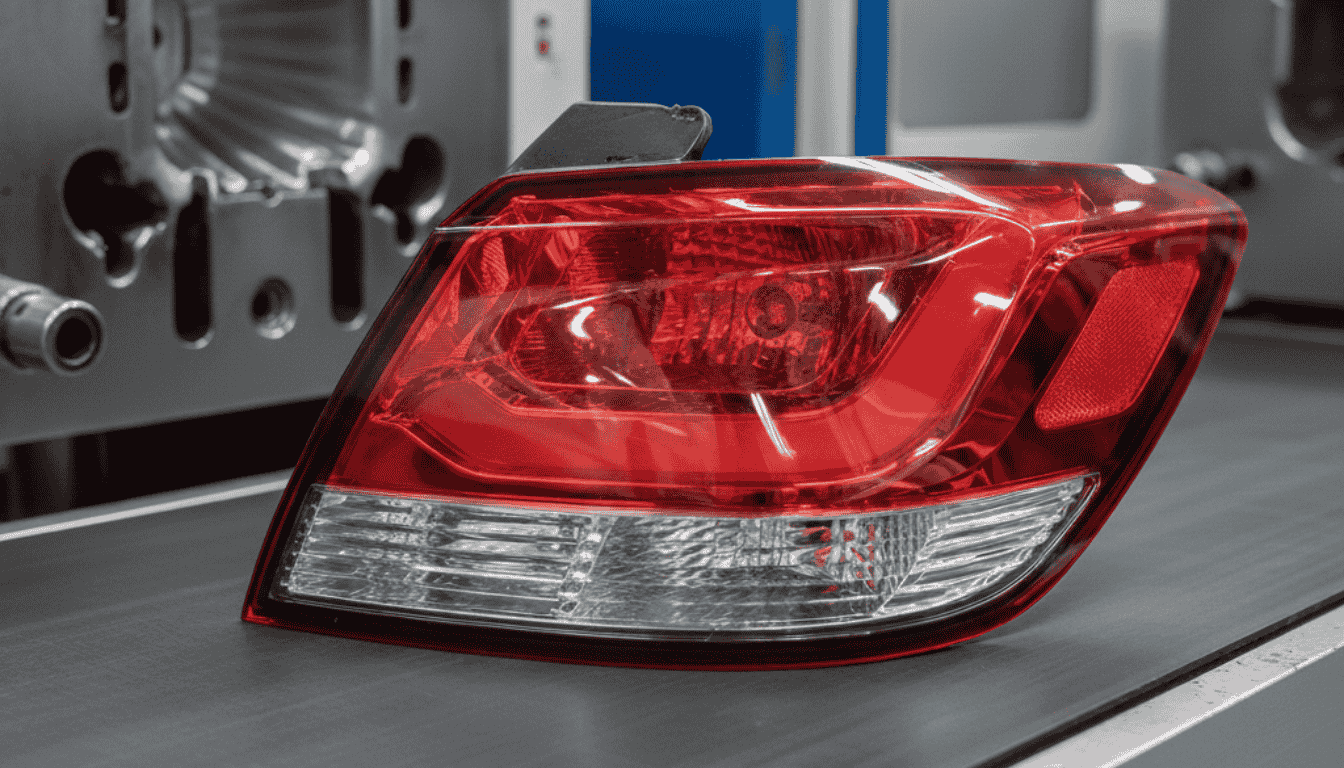
In today’s automotive industry, plastic components play a critical role in vehicle safety, aesthetics, weight reduction, and cost efficiency.
From interior trims and bezels to functional under-the-hood parts, the quality of plastic components directly affects vehicle performance and long-term reliability.
This is why the automotive injection molding process is fundamentally different from a general plastic injection molding process. It is not just about shaping plastic, it is about engineering precision, process stability, and consistency over millions of production cycles.
This article provides a step-by-step explanation of the automotive injection molding process, highlighting key technical considerations, common risks, and why engineering-driven manufacturing is essential for OEM and Tier suppliers.
What Is the Automotive Injection Molding Process?
The automotive injection molding process is a manufacturing method where molten plastic material is injected into a precision mold to produce high-quality automotive components in large volumes.
Compared to standard plastic injection molding, automotive-grade molding requires:
- Tighter dimensional tolerances
- Higher visual standards (Visual A surfaces)
- Long-term production stability
- Compliance with strict OEM quality systems
Because of these requirements, every stage of the plastic injection molding process must be tightly controlled and well-documented.
Automotive Injection Molding Process: Step-by-Step Explanation
Step 1: Plastic Material Selection and Preparation
The process begins with selecting the right plastic material based on the part’s function, environment, and OEM requirements. Common automotive materials include ABS, PC, PMMA, PA (Nylon), PP compound, POM, and ASA.
Each material has unique characteristics related to strength, heat resistance, chemical resistance, and aesthetics.
Before molding, materials must be properly dried and conditioned. Moisture control is especially critical for engineering plastics, as excess humidity can cause defects such as silver streaks, delamination, or reduced mechanical strength.
Material preparation sets the foundation for quality and consistency in automotive injection molding.
Step 2: Mold Design and Tooling Engineering
Mold design is the backbone of the entire automotive injection molding process. A well-designed mold determines:
- Flow behavior of molten plastic
- Cooling efficiency
- Dimensional stability
- Surface quality
Key mold design factors include gate location, runner balance, wall thickness uniformity, venting, and cooling channel layout. A properly engineered mold widens the process window, allowing stable production even with minor process variations.
In automotive applications, a poor mold design cannot be “fixed” by process control alone—it will create recurring quality issues throughout the product lifecycle.
Step 3: Injection Molding Machine Setup
Once the mold is ready, the injection molding machine is set up according to the material and part requirements. This step includes selecting the appropriate machine tonnage and configuring key parameters such as:
- Injection pressure
- Injection speed
- Barrel temperature
- Mold temperature
Incorrect setup at this stage can lead to defects like short shots, burn marks, or excessive stress inside the molded part. In automotive injection molding, machine setup is standardized, documented, and continuously reviewed to ensure repeatability.
Step 4: Injection and Filling Process
During injection, molten plastic is injected into the mold cavity at controlled speed and pressure. The goal is to fill the cavity completely and uniformly without trapping air or creating unstable flow patterns.
Common risks during this step include flow marks, weld lines, and air traps—especially on visible components such as lens parts and bezels. Proper control of injection speed and melt temperature is essential to maintain surface quality and structural integrity.
This step is where many injection molding defects originate if flow behavior is not properly managed.
Step 5: Packing, Holding, and Cooling
After the cavity is filled, packing and holding pressure are applied to compensate for material shrinkage as the plastic cools. This stage directly affects sink marks, internal voids, and dimensional accuracy.
Uniform cooling is equally critical. Uneven cooling can cause warpage, especially in parts with ribs, bosses, or complex geometries. In automotive plastic injection molding, cooling systems are designed to ensure consistent heat removal across the entire part.
Stable packing and cooling are key contributors to long-term production consistency.
Step 6: Part Ejection and Handling
Once the part has cooled sufficiently, it is ejected from the mold. Ejection systems must be carefully designed to avoid scratches, deformation, or stress marks—particularly for Visual A surfaces.
Proper handling after ejection is also critical. Automotive parts often require careful placement using jigs or fixtures to prevent deformation before final inspection or secondary processes.
Step 7: Post-Processing and Secondary Operations
Depending on the component, post-processing may include trimming, surface inspection, painting preparation, or assembly. Environmental control during these stages, such as temperature and humidity, plays a major role in preventing secondary defects.
In many automotive applications, jigs are used to maintain part geometry during inspection or downstream processes, ensuring dimensional consistency and repeatability.
Key Process Parameters in Automotive Injection Molding
Throughout the entire plastic injection molding process, several parameters are continuously monitored:
- Temperature (material and mold)
- Pressure
- Injection speed
- Environment (humidity and cleanliness)
Even small deviations in these parameters can affect visual quality, dimensional stability, and batch-to-batch consistency. That is why automotive injection molding relies on continuous monitoring rather than one-time machine setup.
Common Challenges in the Automotive Injection Molding Process
Automotive parts are particularly sensitive to defects in areas such as:
- Visual A surfaces
- Painting areas
- Locking and assembly zones
Defects may not always be visible immediately but can cause issues during assembly or long-term vehicle use. This is why understanding the entire injection molding process—rather than focusing only on final inspection is essential for defect prevention.
Why Engineering-Driven Injection Molding Matters
Process control is an effective tool for short-term correction, but mold design is the foundation of long-term quality. A well-engineered mold expands the process window, making production more stable, repeatable, and cost-efficient.
In automotive programs that run for many years, engineering-driven injection molding is not optional, it is a requirement.
From Process Understanding to Production Stability
Understanding the automotive injection molding process step by step helps OEMs and Tier suppliers reduce risk, prevent recurring defects, and achieve consistent quality over long production runs.
Ultimately, success in automotive injection molding comes from the integration of:
- Mature mold design
- Disciplined process control
- Environmental management
- Deep understanding of OEM requirements
Banshu Plastic Indonesia: Your Engineering-Driven Automotive Injection Molding Partner
In automotive injection molding, preventing defects is not about final inspection, it is about building quality into the process from the very beginning.
With over 20 years of experience in automotive plastic injection molding, Banshu Plastic Indonesia supports OEMs and Tier suppliers through engineering-driven manufacturing solutions, from mold design to stable mass production.
Located in Jababeka Industrial Park, Cikarang, Indonesia, Banshu Plastic operates in a strategic automotive industrial hub and actively contributes to the national mold and tooling ecosystem as a member of IMDIA (Indonesia Mold & Dies Industry Association).
Banshu Plastic’s commitment to quality and long-term production stability is reinforced by internationally recognized certifications, such as IATF 16949:2016, ISO 9001:2015, and ISO 14001:2015.
If you are developing automotive injection molded parts, facing recurring quality challenges, or preparing for long-term OEM production programs, Banshu Plastic Indonesia is ready to be your manufacturing partner, not just a supplier.
Contact Banshu Plastic Indonesia to discuss a more stable, repeatable, and engineering-focused automotive injection molding solution for your next program.