
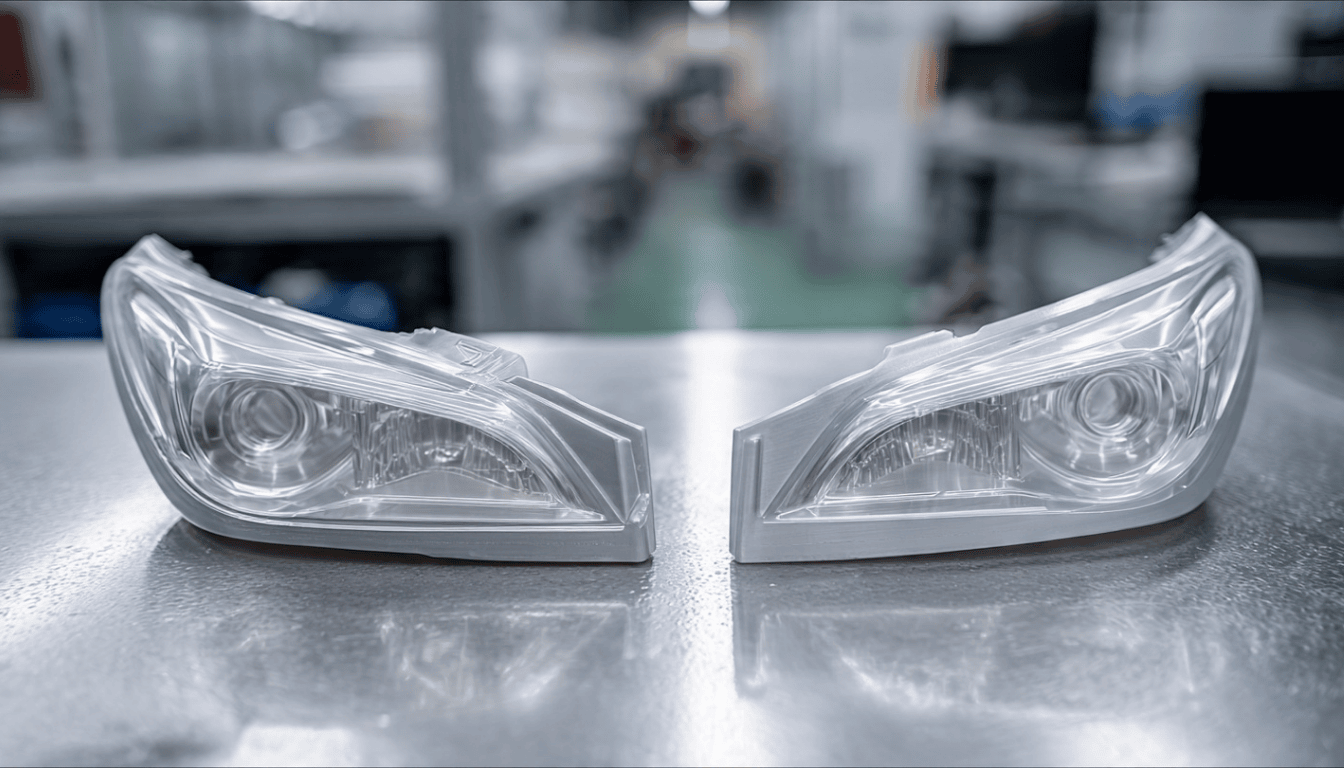
The automotive industry today operates under significantly tighter technical and commercial constraints than ever before.
OEMs and Tier suppliers are required to deliver vehicles that are lighter, more energy-efficient, and more cost-competitive, while simultaneously meeting strict safety standards, durability targets, and global quality compliance.
Within this environment, automotive plastic injection molding has evolved into a strategic manufacturing capability rather than a simple production method.
Injection molding is no longer limited to producing interior trims or cosmetic components. In modern vehicle platforms, it enables structural brackets, air management systems, battery housings, sensor enclosures, and multi-functional assemblies that must perform reliably over long service lifecycles.
For the global automotive sector, injection molding has become a technical enabler — supporting lightweighting strategies, part integration, and scalable mass production with validated process stability.
Real Challenges Faced by Automotive OEMs in Designing and Manufacturing Vehicle Components
Modern vehicle development programs face multidimensional pressures that extend beyond design innovation. Some of the most critical challenges include:
1. Aggressive vehicle lightweighting targets
Weight reduction is directly linked to fuel efficiency in ICE vehicles and extended driving range in EV platforms.
Replacing metal components with engineered plastics requires not only material substitution, but structural validation and dimensional control to maintain strength and durability.
2. Cost-down requirements without compromising reliability
Annual cost reduction expectations demand optimized material usage, cycle time efficiency, and tooling longevity. However, lowering cost cannot introduce dimensional variation, cosmetic defects, or reduced mechanical performance.
3. Increasing design complexity
Modern components often integrate multiple functions into a single molded part, snap fits, airflow channels, mounting bosses, wire routing features, and sealing interfaces. This increases mold complexity and tightens processing windows.
4. Quality consistency across long-term and multi-location production
Automotive programs may run for 5–10 years and involve multiple production sites. Process repeatability, mold durability, and standardized parameter control become critical to maintaining dimensional stability over time.
5. Risk of manufacturing defects and supply chain instability
Defects such as warpage, sink marks, flash, or weld-line weakness can disrupt assembly operations. At the same time, supply chain volatility requires manufacturing partners capable of stable, predictable output.
These challenges cannot be solved through product design optimization alone. A concept drawing or CAD model must be translated into a physical component that consistently meets tolerance, strength, and surface quality requirements, across hundreds of thousands of cycles.
This is where automotive injection molding becomes a strategic solution.
When properly engineered, injection molding integrates:
a. Material science
b. Precision tooling design
c. Controlled processing parameters
d. Statistical quality monitoring
The result is a manufacturing system capable of delivering lightweight, complex, and high-precision components at mass-production scale, aligned with the long-term stability requirements of global automotive programs.
Why Automotive Plastic Injection Molding Has Become the Global Industry Standard
Automotive plastic injection molding has become the global industry standard not simply because it is efficient, but because it delivers a rare combination of precision, scalability, repeatability, and cost control within a single manufacturing platform.
Compared to alternative processes such as machining, thermoforming, or die casting, injection molding offers superior capability in producing complex geometries with tight tolerances at high production volumes. Once the mold and process parameters are fully validated, dimensional variation can be tightly controlled across hundreds of thousands or even millions of cycles.
From an OEM perspective, this level of repeatability is critical. Automotive components must maintain:
1. Consistent fit within assembly systems
2. Stable mechanical performance over time
3. Surface quality aligned with brand standards
4. Compliance with regulatory and safety requirements
Injection molding supports these needs through engineered tooling, balanced cavity design, controlled packing pressure, and optimized cooling systems.
The process enables predictable shrinkage compensation and uniform material distribution, both essential for maintaining tolerance stability.
Another strategic advantage lies in part integration. Injection molding allows multiple features, mounting points, reinforcement ribs, clips, ducts, and brackets, to be consolidated into a single molded component.
This reduces secondary assembly steps, lowers total system weight, and improves manufacturing efficiency.
For OEMs and Tier suppliers managing long-term vehicle platforms, injection molding also offers production stability across the entire program lifecycle from prototype validation and pre-production trials to full-scale mass production.
Once the process window is defined and validated, it can be replicated consistently across shifts and production batches with statistical process control.
In high-volume automotive manufacturing, this consistency is not optional, it is foundational. Even small dimensional drift can disrupt automated assembly lines or compromise downstream component alignment.
For these reasons, automotive plastic injection molding has evolved beyond a material-forming method.
It has become a strategic manufacturing standard enabling lightweight design, cost optimization, and reliable large-scale production for modern vehicle platforms.
What Differentiates Automotive Plastic Injection Molding from General Injection Molding?
At a fundamental level, automotive injection molding follows the same core principles as general injection molding: controlled melting, cavity filling, packing, cooling, and ejection.
The difference lies in the level of technical rigor, validation depth, and long-term production stability required by the automotive industry.
Automotive components are not simply molded parts, they are functional elements integrated into complex mechanical and electronic systems. As such, the performance threshold is significantly higher.
Key differentiators include:
1. Tighter and More Consistent Dimensional Tolerances
Automotive parts often interact with automated assembly lines, sealing systems, clips, and mating components. Even small dimensional deviations can lead to:
a. Assembly misalignment
b. Noise, vibration, and harshness (NVH) issues
c. Water leakage
d. Premature wear
Tolerance control must remain stable not only during initial production but across the entire lifecycle of the mold, which may span several years.
This requires accurate shrinkage compensation, cavity balance in multi-cavity molds, and continuous statistical monitoring of critical dimensions.
2. Resistance to Heat, Vibration, and Chemical Exposure
Unlike many consumer products, automotive components operate in demanding environments. Parts may be exposed to:
a. Continuous high temperatures (engine compartment areas)
b. Thermal cycling
c. Mechanical vibration
d. Automotive fluids such as oils and coolants
e. UV exposure in exterior applications
Material selection, fiber orientation control, and packing pressure optimization directly influence long-term durability under these conditions.
3. Long-Term Production Stability
Automotive programs often run for 5–10 years. Production stability must be maintained across extended cycles without significant dimensional drift or cosmetic degradation.
Tool wear, mold surface condition, and cooling system efficiency must be managed through preventive maintenance strategies. Any variation introduced over time can affect fit and function in downstream assemblies.
4. Tight Process Control and Traceability
Automotive manufacturing demands strict process discipline. Critical parameters such as melt temperature, injection speed, holding pressure, and cooling time must operate within validated windows.
Batch-to-batch variation is unacceptable in automotive supply chains. For this reason, process documentation, parameter locking, and statistical process control (SPC) are standard practices.
Ultimately, the success of automotive injection molding depends on the integration of:
a. Precision mold engineering
b. Application-specific material selection
c. Validated process parameters
d. Structured quality management systems
It is this combination rather than the molding machine itself, that differentiates automotive-grade injection molding from general industrial molding.
How Injection Molding Practically Supports Modern Vehicle Design
1. Lightweight Design Without Compromising Strength
Vehicle lightweighting is no longer optional — it is a regulatory and performance-driven requirement. Reducing mass improves fuel efficiency in internal combustion vehicles and directly extends driving range in electric vehicles.
Automotive plastic injection molding enables metal-to-plastic conversion through the use of engineering resins such as glass-fiber-reinforced PA, PBT, or PP compounds.
These materials provide a high strength-to-weight ratio while allowing complex geometries that are difficult or costly to achieve with metal stamping or machining.
Beyond simple material substitution, injection molding supports structural optimization. Reinforcement ribs, localized thickening, and fiber orientation control can be engineered to maintain stiffness while minimizing overall mass.
When properly designed, a molded plastic component can reduce weight significantly while preserving load-bearing performance and dimensional integrity under thermal and vibration exposure.
2. Functional Integration for Design and Assembly Efficiency
Modern automotive components rarely serve a single purpose. A single molded part may integrate:
1. Snap-fit connections
2. Mounting bosses
3. Wire routing guides
4. Airflow channels
5. Reinforcement ribs
6. Sealing interfaces
Injection molding allows these features to be consolidated into one integrated component. This reduces part count, eliminates secondary fastening operations, and shortens assembly time.
From a manufacturing standpoint, fewer parts mean:
1. Lower inventory complexity
2. Reduced assembly error risk
3. Improved production takt time
4. Better alignment consistency
In high-volume automotive assembly lines, even small reductions in assembly steps translate into measurable efficiency gains.
3. Quality Consistency for Global Production
Automotive production operates at a global scale, often involving multiple plants and long program lifecycles. Quality consistency across these environments is critical.
Injection molding supports this requirement through:
1. Validated mold tooling
2. Defined process windows
3. Controlled cooling systems
4. Statistical process control (SPC) monitoring
Once a process is optimized and documented, it can deliver stable dimensional accuracy, surface finish uniformity, and mechanical performance across extended production runs.
For OEMs, this level of repeatability reduces assembly variation and ensures that parts produced today will remain compatible with those produced years later within the same vehicle platform.
Common Injection-Molded Automotive Parts Used in Vehicles
Injection molding is applied across multiple vehicle systems, each with distinct performance requirements.
1. Automotive Interior Components
Interior parts such as dashboards, instrument panels, HVAC housings, center console structures, and trim components rely heavily on injection molding.
These components require:
1. Excellent surface finish and aesthetic consistency
2. Tight dimensional control for assembly fit
3. Resistance to cabin temperature fluctuations
4. Low warpage across large surface areas
Mold surface finishing, gate positioning, and shrinkage compensation become especially critical in large interior panels where cosmetic defects are highly visible.
2. Automotive Exterior Components
Exterior parts including grilles, mirror housings, exterior trims, and non-optical lighting system components must withstand harsh environmental exposure.
Key performance requirements include:
1. UV resistance
2. Weathering stability
3. Thermal cycling durability
4. Impact resistance
Materials such as ASA, PC/ABS blends, or reinforced PP compounds are commonly selected for these applications. Mold design must account for dimensional stability despite varying wall thicknesses and environmental stress.
3. Functional and Structural Components
Injection-molded automotive parts are also widely used in:
1. Electrical connectors
2. Electronic control unit (ECU) housings
3. Structural brackets
4. Clips and locking mechanisms
5. Protective covers
These components often operate under mechanical load, vibration, and chemical exposure. Material selection, fiber reinforcement strategy, and precise tolerance control are critical to ensure long-term reliability.
Each component category requires a distinct combination of:
a. Material engineering
b. Mold design strategy
c. Process parameter optimization
Successful automotive injection molding is therefore not a one-size-fits-all approach, it is a tailored engineering solution aligned with the functional demands of each vehicle system.
Engineering Plastics in Automotive Plastic Injection Molding
In automotive plastic injection molding, material selection is not a routine purchasing decision, it is a core engineering strategy.
The chosen resin directly influences mechanical performance, long-term durability, process stability, cycle time, scrap rate, and ultimately the total cost of ownership of a component.
From an engineering standpoint, every plastic grade has a specific performance envelope: tensile strength, flexural modulus, HDT (Heat Deflection Temperature), impact resistance, chemical compatibility, moisture absorption, and dimensional stability.
Selecting the wrong material may still allow a part to be molded, but it will fail in the field, distort over time, or create production instability.
Therefore, material selection must be based on:
1. Functional load requirements
2. Thermal exposure (continuous and peak temperature)
3. Chemical environment
4. Vibration and fatigue conditions
5. Regulatory and safety standards
6. Cost targets for mass production
Below are the most commonly used engineering plastics in automotive injection molding, along with their technical positioning.
1. ABS and PC-ABS
Acrylonitrile Butadiene Styrene (ABS) and PC-ABS blends are widely used for interior trim components and electronic housings.
ABS offers:
1. Balanced mechanical strength and impact resistance
a. Good surface finish and paintability
b. Stable processing behavior
PC-ABS enhances:
a. Heat resistance
b. Impact performance at elevated temperatures
c. Structural reliability
Case Perspective:
For an instrument panel sub-component requiring tight tolerance and high aesthetic surface quality, PC-ABS provides dimensional precision while maintaining impact resistance during airbag deployment simulations. These materials are ideal when surface appearance, tactile quality, and dimensional consistency are critical.
2. Polypropylene (PP) Compounds
Polypropylene (PP) is one of the most widely used materials in automotive applications due to its:
a. Low density (lightweight advantage)
b. Excellent chemical resistance
c. Cost efficiency
d. Good fatigue resistance
However, standard PP may lack stiffness for structural parts. Therefore, in automotive applications, it is often modified into glass-fiber or mineral-filled PP compounds. These reinforced grades improve:
a. Flexural modulus
b. Heat resistance
c. Dimensional stability
Case Perspective:
In a lightweight bracket redesign project, replacing an unfilled resin with 30% glass-fiber PP reduced part deflection by over 40% while maintaining cost targets and reducing vehicle weight.
PP compounds are particularly suitable for semi-structural components where weight reduction and cost control are strategic priorities.
3. Polyamide (PA / Nylon)
Polyamide (PA) commonly known as nylon is used for mechanically loaded and thermally stressed components. Key properties include:
a. High tensile strength
b. Excellent wear resistance
c. Good fatigue performance
d. Superior heat resistance
Glass-fiber reinforced PA grades are frequently used when higher structural rigidity is required.
Case Perspective:
For an under-hood cable clamp exposed to continuous temperatures above 120°C and engine vibration, PA66 GF provided stable mechanical integrity across extended validation cycles.
PA is typically selected for functional parts operating in demanding environments.
4. Polybutylene Terephthalate (PBT)
PBT is widely used for electronic and electrical automotive components due to:
a. Excellent dimensional stability
b. Strong heat resistance
c. Reliable electrical insulation properties
d. Low moisture absorption compared to PA
It performs well in connectors, sensor housings, and control modules.
Case Perspective:
For a multi-pin automotive connector housing, PBT ensured dimensional precision for terminal alignment while maintaining dielectric strength under thermal cycling conditions.
5. Polyoxymethylene (POM)
POM (Acetal) is selected for precision functional components requiring:
a. Low friction coefficient
b. High stiffness
c. Excellent creep resistance
d. Outstanding dimensional accuracy
It is commonly used in:
a. Gears
b. Snap-fit mechanisms
c. Locking systems
d. Sliding components
Case Perspective:
In a seat adjustment gear mechanism, POM reduced wear and noise generation compared to alternative polymers, ensuring smooth operation throughout lifecycle testing.
6. Acrylonitrile Styrene Acrylate (ASA)
ASA offers mechanical characteristics similar to ABS but with significantly improved:
a. UV resistance
b. Weatherability
c. Color stability under outdoor exposure
It is frequently applied in exterior components exposed to sunlight and environmental stress.
Case Perspective:
For exterior trim parts subjected to prolonged UV exposure, ASA prevented discoloration and surface degradation during accelerated weathering tests.
Engineering Material Selection as a Strategic Advantage
When approached correctly, engineering plastic selection is not simply about meeting technical specifications, it is about aligning:
a. Design intent
b. Manufacturing capability
c. Long-term field reliability
d. Cost efficiency
In automotive plastic injection molding, the right material strategy ensures not only part performance but also stable mass production, reduced defect risk, and predictable lifecycle durability.
What OEMs Should Evaluate When Selecting an Automotive Injection Molding Partner
In the automotive sector, selecting an injection molding company is not a transactional procurement decision, it is a long-term operational risk assessment.
The chosen supplier will influence product quality, production continuity, warranty exposure, and brand reputation across the entire lifecycle of a vehicle program. OEMs and tier suppliers should evaluate the following critical factors:
1. Proven Automotive Industry Experience
Automotive production is fundamentally different from general plastic manufacturing. It requires:
a. Strict compliance with automotive standards
b. PPAP and APQP discipline
c. Traceability systems
d. Process validation capability
A supplier with documented experience in automotive programs understands launch management, engineering change control (ECN), and long-term production stability across multi-year vehicle platforms.
Case Insight:
During a vehicle facelift program, a supplier without automotive program management experience failed to manage mold modification timing properly, causing SOP delay.
An experienced automotive molder would anticipate validation loops, dimensional re-approval, and capacity ramp-up requirements.
2. Strong Material and Mold Engineering Capability
Injection molding success depends on three technical pillars:
1. Material selection
2. Mold design precision
3. Process parameter control
A competent automotive injection molding company must be able to:
a. Recommend engineering-grade materials based on functional load and environmental exposure
1. Optimize gate design, runner balance, cooling channels, and venting
2. Conduct mold flow analysis to predict warpage and shrinkage
Without in-house engineering capability, suppliers often rely on trial-and-error, increasing lead time and defect risk.
3. Robust Quality Control Systems
Automotive production demands statistical control and documented process stability.
OEMs should verify:
1. IATF 16949 compliance
2. ISO 9001 quality systems
3. Incoming material inspection protocols
4. In-process dimensional monitoring
5. Cpk and Ppk capability tracking
6. Traceability down to cavity level
Quality in automotive injection molding is not inspected at the end, it is built into the process.
4. Capability for Long-Term Production Programs
Automotive programs typically run 5–10 years or longer. The injection molding partner must demonstrate:
1. Preventive mold maintenance systems
2. Spare part management
3. Capacity planning
4. Redundancy strategies
5. Engineering change adaptability
Case Insight:
In long-running interior trim programs, lack of preventive maintenance caused cavity wear, leading to dimensional drift after several million shots. A disciplined maintenance schedule prevents such gradual degradation.
5. Readiness for Global Supply Chain Requirements
For global OEMs, production stability across regions is critical. Suppliers must show:
1. Export readiness
2. Compliance with international standards
3. Packaging validation for overseas shipment
4. Documentation discipline
5. Risk mitigation plans for logistics disruptions
An automotive injection molding partner should understand global program synchronization, not just local manufacturing.
Why the Injection Molding Partner Must Be Strategic
The right injection molding company acts as:
1. A DFM (Design for Manufacturing) consultant
2. A material engineering advisor
3. A risk management contributor
4. A production stability partner
They engage early in the development phase, identifying potential design weaknesses before tooling investment is finalized. This reduces modification costs, shortens development cycles, and improves first-shot success rates.
A production vendor delivers parts. A strategic partner delivers reliability.
Risks of Selecting the Wrong Automotive Injection Molding Company
Choosing a supplier based solely on price often leads to systemic operational risks:
1. Inconsistent Product Quality
Unstable process parameters cause dimensional variation, flash, sink marks, or warpage.
2. High Rejection Rates
Poor mold design or improper material drying leads to scrap escalation and cost overruns.
3. Production Downtime
Unplanned machine failure or mold breakdown can halt OEM assembly lines, an extremely high-cost consequence.
4. Escalating Mold Repair Costs
Improper tool steel selection or weak preventive maintenance accelerates wear and unexpected refurbishment expenses.
5. Global Supply Chain Disruptions
Inadequate capacity planning or poor logistics coordination can impact multiple assembly plants simultaneously.
Root Cause: Often Not Material, But System Weakness
In many cases, component failure or production instability is not caused by the plastic resin itself. The root cause typically lies in:
1. Insufficient engineering analysis
2. Weak process control
3. Inadequate quality systems
4. Poor preventive maintenance discipline
Automotive injection molding is a precision manufacturing discipline. Success depends on structured systems, technical competence, and long-term operational commitment.
For OEMs and tier suppliers, selecting the right injection molding partner is not about short-term cost savings, it is about securing production stability, protecting program timelines, and ensuring consistent vehicle quality across global markets.
Banshu Plastic: A Strategic Partner for Automotive Injection Molding
Banshu Plastic Indonesia is a professional plastic injection manufacturing company focused on serving OEMs and global industries.
With over 20 years of experience, we have become a trusted partner for customers in the automotive sector, particularly in plastic injection molding.
Our technical expertise is supported by the implementation of international quality standards and premium certifications, including IATF 16949:2016, ISO 14001:2015, and ISO 9001:2015.
These certifications reflect our commitment to product quality, process consistency, and environmental responsibility.
With this foundation, Banshu Plastic is ready to support your industry with high-quality plastic components across automotive, electronics, and home appliance sectors.
Every project is handled with a mature engineering approach and a strong focus on each customer’s specific requirements.
Supported by strict quality control systems and manufacturing readiness aligned with international standards, Banshu Plastic is committed to growing together with our customers as a reliable long-term partner in plastic injection molding solutions.
Click Get a Quote to connect with our team and discuss how Banshu Plastic can support your production requirements.