
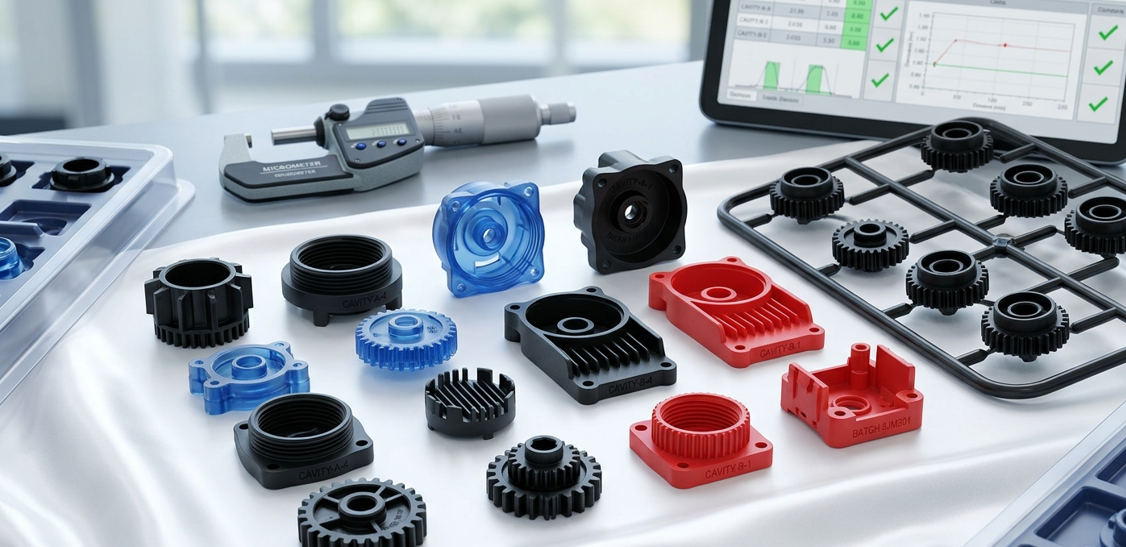
Injection molding is one of the most widely used manufacturing processes for producing plastic components at scale. From automotive parts and electronic housings to industrial and consumer products, the process offers high repeatability, consistent quality, and efficient mass production capability.
However, when evaluating injection molding cost, many companies focus only on the initial piece price without fully understanding the broader cost structure behind the manufacturing process.
In reality, injection molding cost is influenced by multiple factors, including tooling complexity, material selection, production volume, process efficiency, and long-term supply chain considerations. For OEMs and procurement teams, understanding these factors is essential for making informed sourcing and manufacturing decisions.
As global supply chains continue to evolve, manufacturers are increasingly prioritizing production stability, scalability, and long-term value not simply the lowest upfront cost.
What Determines Injection Molding Cost?
Several interconnected factors influence the total cost of an injection molding project.
Tooling Cost and Injection Mold Price
Tooling is typically the largest upfront investment in injection molding. The final injection mold price depends on factors such as:
1. Part geometry complexity
2. Number of cavities
3. Mold size
4. Mold steel selection
5. Runner system configuration
6. Expected production volume
For example, single-cavity molds are generally simpler and more cost-effective for lower production quantities, while multi-cavity molds improve efficiency for high-volume manufacturing.
Hot runner systems may also increase initial tooling investment but can reduce material waste and improve cycle efficiency over long production runs.
When evaluating tooling cost, manufacturers should consider not only the initial mold investment but also long-term durability, maintenance requirements, and production stability.
Material Cost and Injection Molding Plastic Cost
Material selection is another major contributor to injection molding plastic cost.
Commodity plastics such as:
1. Polypropylene (PP)
2. Polyethylene (PE)
3. ABS
Are generally more cost-efficient for standard applications.
Meanwhile, engineering plastics such as:
1. Nylon (PA)
2. Polycarbonate (PC)
3. POM (Acetal)
Offer enhanced mechanical performance, heat resistance, and dimensional stability but typically involve higher material costs.
The appropriate material should be selected based on actual application requirements rather than over-specification. Using unnecessarily high-performance materials may increase cost without providing meaningful functional benefits.
Production Volume
Injection molding becomes increasingly cost-efficient as production volume increases.
Although tooling investment may appear significant initially, the cost per part decreases substantially in large production runs because tooling costs are distributed across higher quantities.
This is one of the primary reasons injection molding is commonly used for mass production applications where long-term manufacturing efficiency is critical.
Part Design Complexity
Part geometry has a direct impact on manufacturing cost.
Features such as:
1. Undercuts
2. Thin-wall sections
3. Tight tolerances
4. Complex surface textures
Often require more sophisticated tooling and longer cycle times.
Complex designs may also increase the risk of production defects, which can affect overall manufacturing efficiency and scrap rates.
From an engineering perspective, optimizing part design early through Design for Manufacturability (DFM) evaluation is one of the most effective ways to improve long-term production economics.
Secondary Processes
Additional manufacturing steps can also affect total production cost, including:
1. Assembly
2. Surface finishing
3. Painting
4. Insert molding
5. Quality inspection
These processes should be evaluated as part of the total manufacturing strategy rather than as isolated operations.
Understanding Injection Mold Price Beyond Initial Investment
One of the most common sourcing mistakes is evaluating tooling purely based on initial mold price.
In practice, tooling quality has a direct impact on:
1. Production consistency
2. Mold lifespan
3. Maintenance frequency
4. Defect rates
5. Downtime risk
A lower-cost mold may appear attractive at the beginning of a project but can create long-term operational inefficiencies if tooling quality is insufficient.
For high-volume production, stable tooling performance is often more valuable than minimizing upfront tooling cost.
The Importance of DFM
Design for Manufacturability (DFM) plays a critical role in cost optimization.
By evaluating the product design before tooling development begins, manufacturers can identify opportunities to:
1. Reduce unnecessary complexity
2. Improve moldability
3. Optimize wall thickness
4. Minimize cycle time
5. Improve production consistency
DFM analysis not only improves manufacturability but also helps reduce long-term production cost and quality risks.
Injection Molding Cost Efficiency in Southeast Asia
As global sourcing strategies continue to evolve, many OEMs are reassessing how manufacturing locations impact total production value.
Rather than focusing solely on low-cost sourcing, manufacturers are increasingly seeking:
1. Supply chain resilience
2. Operational stability
3. Cost predictability
4. Diversified manufacturing networks
In this environment, Southeast Asia has become an increasingly strategic manufacturing region.
Indonesia as a Cost-Efficient Manufacturing Alternative
Indonesia offers several advantages as a manufacturing location for plastic injection molding:
1. Competitive operational costs
2. Growing industrial manufacturing infrastructure
3. Expanding engineering capability
4. Increasing integration with global supply chains
Importantly, the value proposition is not based on being the “cheapest” manufacturing option. Instead, Indonesia provides a balance between cost efficiency, scalability, and production stability.
For many global OEMs, this balance is becoming increasingly important as sourcing strategies shift toward long-term operational reliability.
Value Beyond Piece Price
When evaluating custom injection molding cost, manufacturers should consider factors beyond the quoted unit price, including:
1. Engineering support capability
2. Tooling expertise
3. Quality consistency
4. Production scalability
5. Export readiness
6. Communication reliability
In many cases, long-term manufacturing performance has a greater impact on total cost than small differences in initial pricing.
Optimizing Custom Injection Molding Cost
Optimize Part Design
Simplifying geometry and maintaining uniform wall thickness can reduce:
1. Tooling complexity
2. Cycle time
3. Defect risk
Even small design improvements can significantly improve manufacturing efficiency over large production volumes.
Select Materials Strategically
Material selection should align with actual performance requirements.
Over-engineering materials can unnecessarily increase both material and processing costs.
Improve Mold Design
Well-designed molds improve:
1. Cooling efficiency
2. Flow balance
3. Production consistency
This reduces cycle time, improves repeatability, and lowers defect rates.
Work with Integrated Manufacturing Partners
Working with manufacturers that provide integrated capabilities can improve production efficiency and reduce coordination complexity.
At Banshu Plastic, integrated manufacturing support includes:
1. Plastic injection molding
2. Mold making and tooling development
3. Jig and checking fixture manufacturing
4. Metal stamping support
This integrated approach improves coordination between tooling, production, and quality control processes while helping manufacturers reduce dependency on multiple suppliers.
Key Considerations When Evaluating Injection Molding Suppliers
Engineering Capability
A qualified manufacturing partner should provide:
a. DFM support
b. Material expertise
c. Process optimization guidance
Strong engineering support is critical for reducing long-term production risk.
Quality Standards
Structured quality systems are essential for consistent production performance.
Banshu Plastic operates under internationally recognized certifications, including:
a. ISO 9001:2015
b. IATF 16949:2016
c. ISO 14001:2015
These systems support process consistency, traceability, and quality control for industrial and automotive applications.
Export and Global Supply Support
For international OEMs, export readiness is equally important.
Banshu Plastic has experience supporting overseas shipments through reliable export-import logistics partners, ensuring efficient coordination for global supply requirements.
This includes support for:
a. Export documentation
b. International shipping coordination
c. Production scheduling alignment
Reliable communication and logistics coordination are critical factors in maintaining stable international supply chains.
Injection molding cost should be evaluated as part of a broader manufacturing strategy rather than as a simple comparison of initial pricing.
Tooling quality, material selection, process efficiency, production scalability, and supply chain reliability all contribute to the total manufacturing value of a project.
As global sourcing priorities continue to shift, manufacturers are increasingly seeking production partners that can provide stable, scalable, and cost-efficient manufacturing solutions.
Indonesia is emerging as a strong manufacturing alternative within Southeast Asia, offering a balance between operational stability, engineering capability, and long-term production value for global OEMs.
Technical Consultation & RFQ Support
For OEMs and procurement teams evaluating custom injection molding projects, early technical collaboration can significantly improve production efficiency and long-term manufacturing performance.
Banshu Plastic supports customers through integrated manufacturing capabilities, including injection molding, mold development, jig and checking fixture production, and metal stamping support.
Engineering teams can submit 3D drawings for technical feasibility review, Design for Manufacturability (DFM) evaluation, and tooling strategy discussion.
For RFQ requests or to discuss your project requirements, contact our engineering team to explore manufacturing solutions aligned with your cost, quality, and supply chain objectives.