
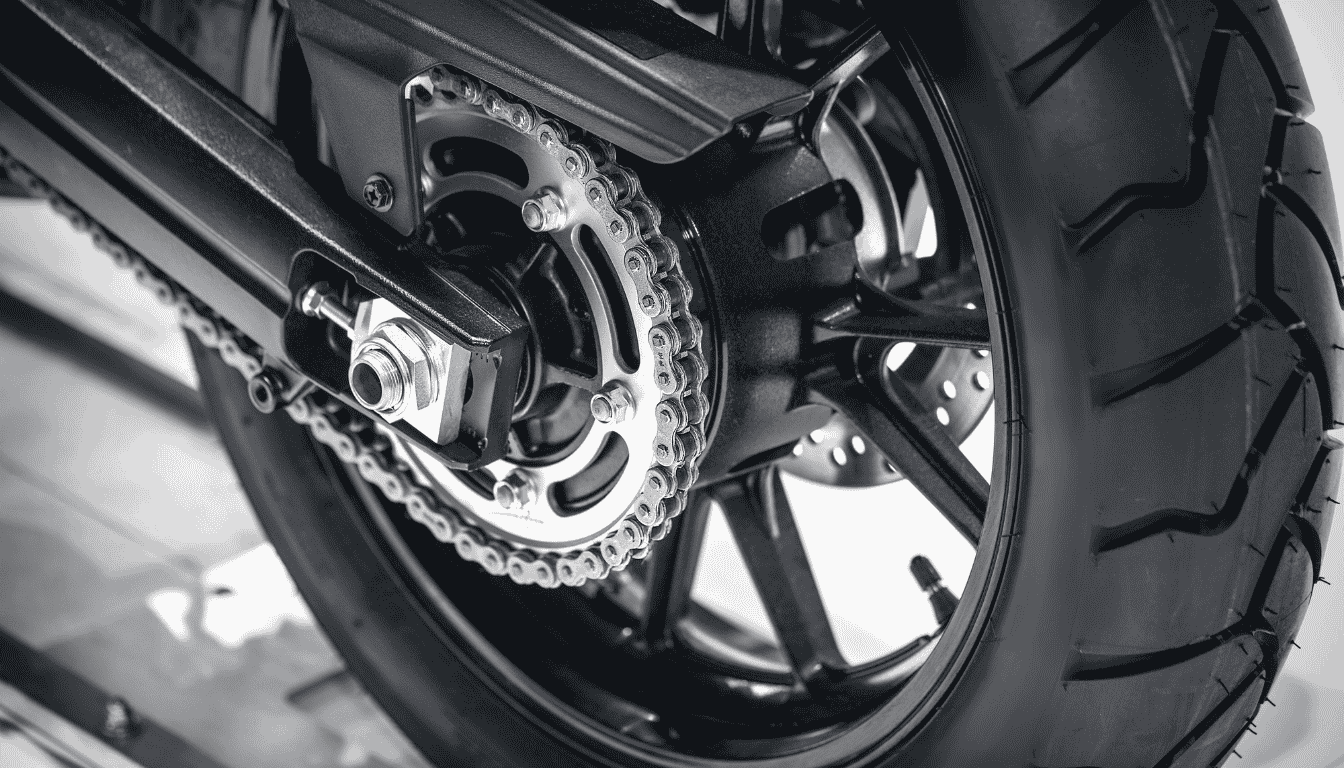
The modern motorcycle industry has undergone a significant material transformation. While metal remains essential for primary structural systems such as frames and load-bearing brackets, motorcycle plastic parts have become the dominant solution for exterior, aerodynamic, and cosmetic assemblies.
Through injection molding technology, manufacturers can produce lightweight, impact-resistant, and cost-efficient plastic motorcycle parts that outperform traditional stamped or cast metal panels in many non-structural and semi-structural applications.
The ability to integrate complex geometries, mounting features, and reinforcement ribs within a single molded component further enhances functional efficiency.
This transition is not trend-driven, it is rooted in engineering logic. Weight optimization, corrosion resistance, dimensional repeatability, and scalable production economics make injection molding the preferred manufacturing process for a wide range of motorcycle auto parts.
Below is a technical analysis explaining why injection molding is often selected over metal fabrication for modern motorcycle applications.
1. Engineering Limitations of Metal in Motorcycle Body Parts
1.1 Density and Weight Penalty
Material density directly influences vehicle mass distribution and dynamic performance.
a. Steel: 7.8 g/cm³
b. Aluminum: 2.7 g/cm³
c. Polypropylene (PP): 0.9 g/cm³
d. Acrylonitrile Butadiene Styrene (ABS): 1.05 g/cm³
The density differential is significant. Replacing stamped steel or even aluminum panels with motorcycle plastic parts can reduce component mass by more than 50–80%, depending on geometry and thickness.
Lower mass contributes directly to:
a. Improved acceleration performance
b. Better fuel efficiency
c. Enhanced handling responsiveness
d. Optimized center-of-gravity distribution
For commuter and sport motorcycles, reducing upper-body and fairing weight improves maneuverability, especially during cornering and rapid directional changes.
1.2 Corrosion and Surface Degradation
Metal components are inherently vulnerable to environmental exposure, including:
a. Oxidation and rust formation
b. Paint blistering due to substrate corrosion
c. Accelerated degradation in humid or coastal environments
Protective treatments such as powder coating, electroplating, galvanizing, or anodizing increase manufacturing cost and add process complexity.
By contrast, plastic motorcycle parts are intrinsically corrosion-resistant. Thermoplastics do not oxidize, eliminating rust-related failure modes. This makes them highly suitable for exterior body panels exposed to rain, UV radiation, humidity, and road contaminants.
1.3 Manufacturing Constraints of Metal
Metal body panels typically require:
a. Multi-stage stamping operations
b. Secondary forming and trimming
c. Welding, riveting, or mechanical fastening
d. Surface preparation and finishing
Design flexibility is constrained by forming limitations, particularly when dealing with undercuts, thin-wall geometries, or integrated mounting features.
Injection molding removes many of these constraints. Complex geometries, reinforcement ribs, snap-fit features, and mounting bosses can be integrated directly into a single molded component, reducing part count, secondary assembly operations, and overall production complexity in motorcycle auto parts manufacturing.
2. Advantages of Injection Molding for Motorcycle Plastic Parts
2.1 Lightweight Without Compromising Function
Injection-molded motorcycle plastic parts provide sufficient structural performance for non-load-bearing and semi-structural applications while delivering substantial weight reduction.
Typical applications include:
a. Fairings
b. Front and rear fenders
c. Side covers
d. Chain guards
e. Inner cowls
For OEM production programs, mass reduction directly supports fuel efficiency targets, emissions compliance, and improved handling dynamics.
When combined with rib-reinforced geometries, thermoplastics can achieve high stiffness-to-weight ratios suitable for demanding exterior applications.
2.2 Design Flexibility and Functional Integration
A primary advantage of injection molding over metal fabrication in motorcycle auto parts manufacturing is design freedom.
Injection molding enables integration of:
a. Reinforcement ribs
b. Snap-fit locking features
c. Bosses and mounting brackets
d. Internal airflow channels
e. Wire routing clips and retainers
Instead of assembling multiple stamped and welded metal components, engineers can consolidate complex features into a single molded part. This integration reduces:
a. Assembly time
b. Fastener dependency
c. Total part count
d. Manufacturing and logistics complexity
Such geometric freedom and feature integration are difficult and often cost-prohibitive to achieve with stamped metal panels.
2.3 Surface Finish and Aesthetic Quality
Exterior motorcycle plastic parts must meet stringent cosmetic and dimensional standards, particularly for visible Class-A surfaces.
Injection molding supports:
a. Mold-textured finishes
b. High-gloss surface replication
c. Paint-ready substrates
d. Consistent dimensional repeatability
Materials such as ABS and PC/ABS blends provide excellent paint adhesion, impact resistance, and surface quality, making them ideal for high-visibility panels.
Unlike metal, thermoplastics do not require anti-corrosion pretreatment prior to painting, reducing process steps and simplifying finishing operations while maintaining long-term aesthetic durability.
3. Common Materials Used in Motorcycle Plastic Parts
Material selection in motorcycle plastic parts is determined by mechanical load, thermal exposure, cosmetic requirements, and target production cost. In OEM programs, both commodity and engineering-grade thermoplastics are strategically selected based on functional demands.
3.1 Commodity Plastics
Polypropylene (PP)
a. Low density (~0.9 g/cm³)
b. Good chemical resistance
c. Excellent fatigue resistance
d. Cost-efficient for high-volume production
Acrylonitrile Butadiene Styrene (ABS)
a. High impact strength
b. Good dimensional stability
c. Superior paint adhesion and surface finish quality
These materials are commonly used in fairings, fenders, side covers, and other non-load-bearing exterior components. Their balance between performance and cost makes them ideal for large-scale motorcycle auto parts production.
3.2 Engineering Plastics
For applications requiring higher mechanical strength, thermal resistance, or optical performance, engineering-grade resins are preferred.
Polycarbonate (PC)
a. High impact resistance
b. Optical clarity
c. Good heat resistance
PC/ABS Blends
a. Improved toughness compared to ABS
b. Better heat resistance
c. Enhanced dimensional stability
These materials are frequently used for:
a. Headlamp housings
b. Transparent covers and lenses
c. High-impact exterior panels
Compared to commodity resins, engineering plastics provide improved heat deflection performance, higher structural integrity, and greater durability under demanding operating conditions in modern motorcycle applications.
4. Structural Performance: Plastic vs Metal
Although metals exhibit a higher modulus of elasticity and intrinsic stiffness, properly engineered motorcycle plastic parts can achieve adequate rigidity for non-structural and semi-structural body applications. Structural performance in thermoplastics is primarily achieved through geometry optimization rather than material thickness alone.
4.1 Rib Reinforcement Strategy
To compensate for lower material stiffness, design engineers integrate structural features such as:
a. Reinforcement ribs
b. Box sections
c. Curved load-distribution geometries
d. Variable wall thickness transitions
These features significantly increase moment of inertia without excessive mass addition. Finite Element Analysis (FEA) is commonly applied during product development to optimize rib layout, wall thickness, and stress distribution while minimizing warpage and sink marks during injection molding.
4.2 Impact Behavior
Metal panels typically undergo plastic deformation (permanent denting) when subjected to impact.
Repair often requires reshaping or panel replacement.
In contrast, many thermoplastics demonstrate elastic deformation and superior energy absorption characteristics. Under low-speed impact conditions, injection-molded components may flex and recover without permanent surface damage.
This behavior is advantageous for exterior motorcycle auto parts exposed to daily handling, road debris, and minor collisions, reducing cosmetic damage and maintenance frequency.
4.3 Vibration Damping
Thermoplastics inherently provide better vibration damping compared to metals due to their viscoelastic properties. This contributes to:
a. Reduced noise transmission
b. Lower panel rattling
c. Improved rider comfort and NVH performance
For exterior and cosmetic body components, enhanced vibration damping improves perceived build quality and overall product refinement in modern motorcycle platforms.
5. Production Efficiency and Cost Advantage
Injection molding provides strong scalability for high-volume production of motorcycle plastic parts, particularly within OEM manufacturing environments where consistency and cost control are critical.
Key advantages include:
a. Multi-cavity molds to increase throughput
b. Reduced secondary assembly operations through feature integration
c. Lower material waste via controlled runner systems and regrind management
d. Consistent, repeatable cycle times
Although initial tooling investment can be substantial, the per-unit cost decreases significantly at high production volumes. This cost structure makes injection molding highly suitable for OEM-level manufacturing of motorcycle auto parts where annual volumes justify capital expenditure.
In contrast, metal stamping often requires additional welding, trimming, surface finishing, and corrosion protection treatments. These secondary processes increase total production cost, extend lead time, and introduce additional quality control variables.
6. When Metal Remains Essential
Despite the engineering and economic advantages of plastic injection molding, metal remains indispensable for high-load structural components, including:
a. Structural frames
b. Swing arms
c. Engine mounts
d. High-load-bearing brackets
These parts demand tensile strength, fatigue resistance, and rigidity levels beyond the practical limits of standard thermoplastics.
However, for non-structural and semi-structural exterior applications, motorcycle plastic parts provide a more optimal balance of weight reduction, corrosion resistance, cost efficiency, vibration damping, and design flexibility making injection molding the preferred solution in modern motorcycle manufacturing.
Technical Consultation & RFQ Support for Motorcycle Plastic Parts
For OEMs and component suppliers seeking a reliable partner in motorcycle plastic parts manufacturing, early engineering collaboration is essential to ensure dimensional stability, material suitability, and long-term production stability in high-volume programs.
Banshu Plastic Indonesia supports OEM plastic injection molding projects through structured DFM evaluation, optimized mold engineering, and controlled mass production systems designed for consistent motorcycle auto parts output.
Submit your 2D/3D drawings for a technical feasibility review or request RFQ support to evaluate the most appropriate material selection, tooling strategy, and production scalability for your program.
Our engineering team will provide a systematic assessment to strengthen your sourcing decision and ensure stable, repeatable manufacturing performance.