
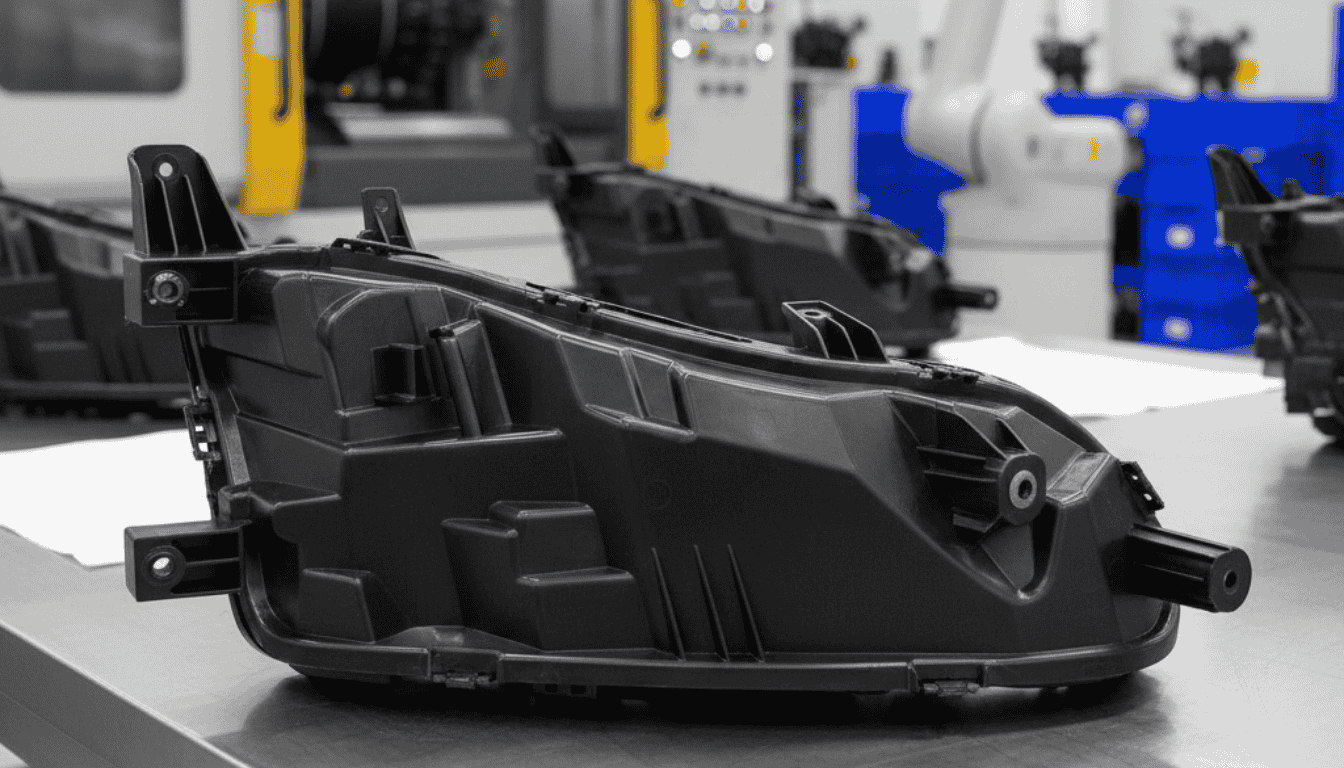
Nowadays car makers aren’t simply focused on churning out huge numbers. Instead, staying competitive means hitting steady quality targets alongside tight budgets.
Lightweight designs matter more than ever thanks to shifting regulations. Meeting tough international rules adds another layer of difficulty. Long runs without hiccups have become a baseline need rather than a bonus.
One way vehicles come together? Injection molding shows up everywhere, inside panels, hidden engine parts, even electric drivetrains. This method holds things steady when building cars at scale: consistency sticks around, quality stays put, output keeps moving.
The Problem With Automotive Mass Production at Scale Now
Automotive mass production presents several recurring challenges:
-Maintaining consistent quality across millions of parts
-Controlling cost per unit while meeting OEM quality requirements
-Managing global platform production with minimal variation
-Preventing hidden costs caused by scrap, rework, or downtime
One reason makers are looking closer at production methods ties back to lasting performance over time. Injection-molded car parts made of plastic stand out here, mainly because they keep up steadily across years of output. Not every technique holds up that way when pushed day after day.
Why Injection Molding Is Ideal for Automotive Mass Production
1. Consistent Quality at Scale
Every car part has to fit just right, work properly, also look clean and precise. The way these pieces are made using melted material shaped inside a mold, keeps everything consistent down to the smallest detail
-Stable dimensions across large production runs
-Uniform material distribution
-Controlled surface finish for visible parts
Staying steady like this matters most when dealing with several suppliers across different countries. What counts is keeping things uniform, especially if parts come together far apart.
Without that balance, mismatches creep in where least wanted. Smooth coordination hinges on predictable patterns from start to finish.
2. Cost Efficiency in High Volume Production
Even though making molds costs money at first, producing large amounts ends up saving cash over time
-Low cost per unit for mass production
-Reduced need for secondary operations
-Minimized material waste
Few methods beat injection molding for making car plastic parts at scale, once smart design guides the process. Efficiency hides in how neatly it handles volume without draining resources.
3. Combining Design and Parts
With injection molding, intricate shapes come together alongside added features like:
Fleshy ridges here. Bumps stand nearby. Fasteners hold things close. Snap connections click into place
-A frame strengthened inside just one piece
-Reduced part count and simplified assembly
-One reason it fits what makers need: faster builds, lighter parts, lasting performance over time.
4. Flexible Materials Meet Car Needs
Injection molding automotive applications support a wide range of materials, including:
-PP and PP compounds for lightweight structures
-ABS and PC-ABS for interior components
-PA and PBT for under-the-hood applications
-POM for precision mechanical parts
Freed from rigid constraints, engineers mix toughness with efficiency while keeping expenses in check, all on one production setup.
High Volume Injection Molding How It Works
Mold Design as the Foundation
A good mold does more than shape parts - it lasts through thousands of cycles. Because precision
matters, every curve and corner affects output.
When cooling channels are uneven, warping shows up down the line. So material choice ties directly to cycle speed and part quality.
If vents clog early, pressure builds where it should not. That leads to flaws hidden until final inspection.
Yet even small misalignments grow worse over weeks of operation. Since molds run nonstop, tiny issues become big stoppages. Only thoughtful layout keeps downtime low and consistency high:
a. Expands the process window
Maintaining steady temperature control comes through consistent liquid movement. Cooling stays reliable when circulation never falters
b. Moves more steadily as days go by
A bad mold layout won’t fix itself, even with careful tuning of production steps.
c. Keeping Systems Steady Over Time
Starting with the mold layout sets the stage, yet fine adjustments happen through how the process runs.
Keeping things consistent means watching heat levels, force applied, flow rate during filling, along with surrounding factors - without pause. Each detail shifts slightly, but staying alert keeps outcomes stable.
Automation and Scalability
Injection molding integrates easily with automation systems, enabling:
-Stable quality at high output
-Reduced operator dependency
-Scalable production for OEM ramp-up programs
Few things match the steady pace of carmaking like shaping parts through molds. That fit? It grows stronger when big builders plan years ahead.
Automotive Parts Commonly Produced by Injection Molding
Injection molding is used across nearly all vehicle systems, including:
-Inside bits: things like control boards, edge coverings, storage boxes
-Fenders take the front line, then grilles sit just behind them. Side mirrors attach through small housings mounted on doors. Bumpers wrap around both ends of the vehicle body
-Pipes sucking in fresh air, then shrouds hiding what hums below, containers holding fluids ready to flow
-Built tough for power jobs - battery cases hold charge tight. Wires link up through snug fittings that won’t slip loose. Shells wrap around delicate parts like armor after a storm
-Few methods match its reach, which keeps injection molding central to how cars are built at scale.
Risks From Picking Wrong Injection Molding Partner
Fewer plastic part makers handle car industry volumes well. Problems often come up like equipment that can’t keep pace, designs failing under stress tests, materials cracking in extreme temperatures, suppliers changing specs without warning, quality checks missing flaws, delivery schedules slipping week after week, teams ignoring feedback until small issues become big ones, factories lacking backup systems when machines fail, engineers skipping real-world trials before launch, communication breaking down between departments at critical moments
Quality wobbles when processes run too tight.
Squeezed conditions make consistency hard to hold. Tiny shifts throw everything off balance quickly. ---Room to maneuver disappears under pressure. Outcomes grow unpredictable without breathing space
-Tooling wear that causes dimensional drift
-Inconsistent output across production batches
Waste sneaks out when materials get tossed aside. Fixing mistakes takes extra time, pulling focus elsewhere. Machines sitting idle lose money slowly. Each pause adds up without saying a word
Far from the first test models, problems tend to surface once things shift into steady large-scale runs - where consistency becomes key.
What OEMs Automotive Manufacturer Need From Plastic Part Suppliers
OEMs and Tier suppliers should evaluate partners based on:
-Proven experience in injection molding automotive programs
-A solid team builds things that work - machine power matters less when design is sharp. What counts comes from how problems get solved, not just tools on hand.
-Precision mold and tooling expertise.
-Readiness for high volume injection molding.
-Quality systems aligned with OEM standards.
Machines shape parts only when minds behind them know their limits. Size of a factory matters less than depth of understanding built over time.
Injection Molding Used for Efficient Production
One wrong move in mold design can unravel everything. Global makers rely on injection molding, though it seems quiet, its role has shifted. Because precision holds every part together, success hides in details most overlook.
Steady processes build trust over time, not overnight. Planning years ahead separates those who react from those who lead. Without warning, small flaws multiply into costly delays. Strong foundations let factories run without constant fixes.
It takes patience, plus clear thinking under pressure. What looks like routine work often decides entire product lifecycles:
-Stable quality
-Predictable costs
-Scalable output
-Reduced operational risk
Banshu Plastic Indonesia: Supporting Automotive Mass Production Through Injection Molding
Banshu Plastic Indonesia brings two decades of hands-on work in car part molding using plastics.
Starting strong in precision production, it backs vehicle makers alongside their key partners. Built on problem-solving methods, its factory floor runs with a focus on smart design fixes. From early sketches to final output, support flows without relying on one-size-fits-all steps.
Banshu Plastic sits within Jababeca Industrial Park, out near Cikarang in West Java - a hub where car part production thrives across Indonesia.
Equipment on site handles tasks like precision molding, material testing follows strict checks, while quality control runs continuously through every batch made here
-Injection molding automotive parts for high volume production
-Precision mold and tooling development
-Stable mass production for long-term OEM programs
Banshu Plastic moves step by step with Indonesia’s mold and die network through its role in IMDIA. Its path ties tightly to local industry rhythms, evolving methods, one shift at a time.
Tools shape progress here - precision grows quietly alongside new techniques. Each update flows into daily work without fanfare. Progress shows up not in speeches but in sharper results. Close contact keeps standards rising from within.
Our manufacturing system is strengthened by internationally recognized certifications:
-IATF 16949:2016
-ISO 9001:2015
-ISO 14001:2015
Banshu Plastic steps in where simple output isn’t enough, offering steady manufacturing support built on precise engineering, consistent operations, because reliability matters most during large-scale auto production runs.
If you are developing automotive plastic components, preparing high volume injection molding programs, or evaluating injection molding automotive partners, Banshu Plastic Indonesia is ready to support your next production phase with consistency and confidence.